
Pests in the Yard: Nests, Mounds and Standing Water
Trees, lawn, shed, rain barrel, the edge of the yard: here are the signs to look for outdoors, and the ones that call for not handling it yourself.
Pests covered: ants, wasps & hornets, mosquitoes, yard & outdoors.

Ants
1. A little volcano of fine soil in the lawn
👀 What you see
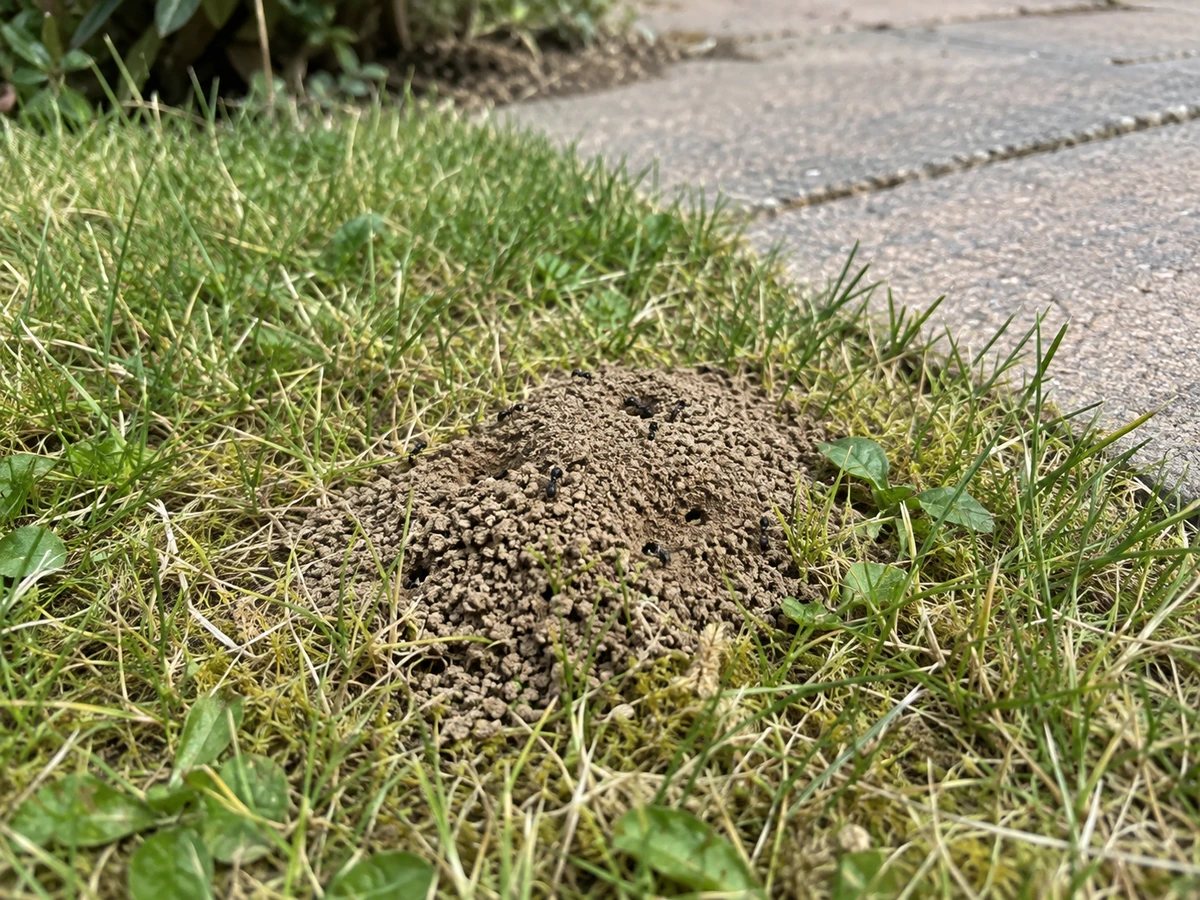
A mound of fine soil in the middle of the grass, often along walkways and patio edges; around it, the grass yellows in patches.
🧭 What it means
A colony of common black lawn ants (Lasius) or pavement ants settled under short, warm, well-drained turf. Flattening it with the mower just moves the soil: the colony rebuilds within days.
✅ The proof: how to confirm
After treatment, if fresh fine soil reappears in the same spot two weeks later, the queen is still alive.
🧩 What to do next
- 1 Identify the species first: tiny reddish ants living inside walls = pharaoh; black foragers coming from outdoors = garden ants; large black ants with coarse sawdust = carpenter ants. The method depends on it.
- 2 Do not spray. Contact spray kills visible workers but never the queen, and with pharaoh ants it can split the colony (budding) and make things worse.
- 3 Wipe active trails with undiluted white vinegar to erase the pheromone highway, then place lentil-sized bait-gel drops directly on those trails, every 4–6 inches.
- 4 Leave the gel undisturbed and let workers carry it back to the nest. Replenish the drops as they are eaten (a good appetite means it is working).
- 5 For an accessible outdoor nest, puff deltamethrin dust into the openings; for carpenter ants, also find and fix the moisture source feeding them.
- 6 Once activity stops, seal entry cracks and pipe gaps with silicone caulk to stop the next generation following the same route.
🛒 Products from our guides
-
Outdoor ant bait stations
The bait kills the colony through the cascade effect, which neither the mower nor a surface granule does.
View on Amazon → -
Child- and pet-safe outdoor ant bait stations
Product enclosed and out of reach: the safe pick with a dog, cat or kids.
View on Amazon → -
Granular lawn ant killer
Knockdown in 24 to 72 hours on a big, troublesome mound; spread it, then water it in.
View on Amazon →
As an Amazon Associate we earn from qualifying purchases, at no extra cost to you.
Wasps & hornets
2. A small papier-mâché nest under the shed eave in spring
👀 What you see
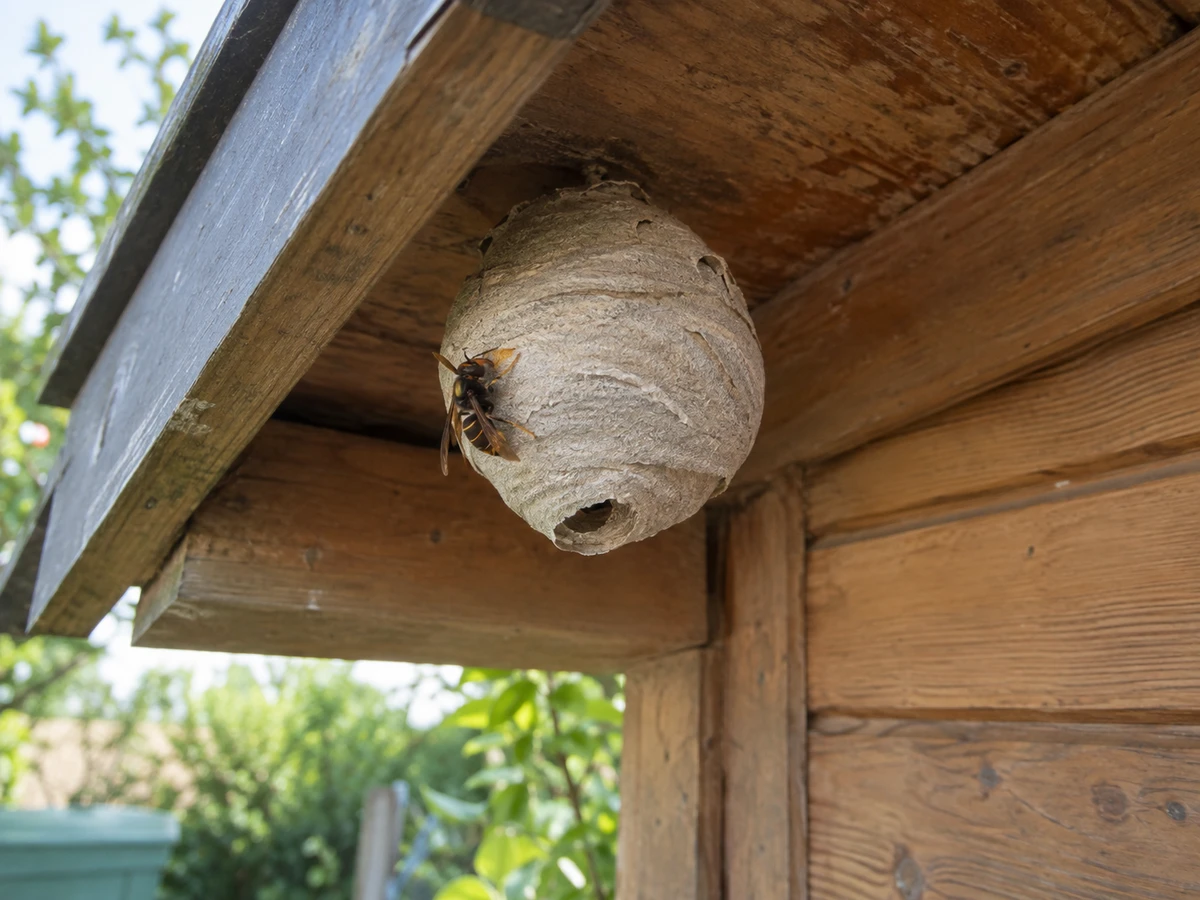
In spring, a small primary nest of chewed paper, about the size of a tennis ball (4 inches), hanging under the eave of a shed, often 3 to 6 feet off the ground, with a lone founding queen.
🧭 What it means
It’s the primary nest of the Asian (yellow-legged) hornet: two months later the colony can number several thousand. The Asian hornet is 1 to 1.2 inches long, with a dark velvety thorax, a dark abdomen with a single orange band and yellow-tipped legs; the European hornet is much more yellow and reddish-brown.
✅ The proof: how to confirm
Photograph the insect without getting close to check for the yellow legs.
⚠️ Caution
Report it first — to your state department of agriculture, or on EDDMapS or iNaturalist. Only a small, low primary nest in spring can possibly be handled yourself.
🧩 What to do next
- 1 Identify first: yellow-and-black, thin-waisted = wasp; rust/brick colored = European hornet (mostly harmless, leave it); black with yellow leg tips = Asian-type/giant hornet → report to authorities and do NOT DIY. Never kill fuzzy bees.
- 2 Decide DIY vs pro: treat it yourself only if the nest is small, low (no ladder), it is a wasp, and you are not allergic. Otherwise call a professional.
- 3 Suit up fully — beekeeping suit, veil and gloves, with wrists and ankles taped — and use a red-light headlamp (wasps cannot see red).
- 4 Treat at night (10–11 PM) when all wasps are back and sluggish: empty a 20-ft spray or foam into the nest entrance, then retreat along a clear, obstacle-free path.
- 5 For a nest inside a wall cavity, puff insecticide dust into the hole — NEVER seal the opening while the colony is alive, or they will push inside the house.
- 6 Wait 48 hours before removing or sealing. Reduce patio pressure with a selective trap placed about 30 feet from where you sit.
🛒 Products from our guides
-
Selective cone trap for yellow-legged hornets
Trapping is judged on selectivity: calibrated cones let Asian hornets in and give smaller insects a way out.
View on Amazon → -
Asian hornet selective bucket trap set
Built against Vespa velutina, to limit catches of beneficial insects.
View on Amazon → -
Long-range wasp and hornet nest spray
Only for a small, low nest in spring, after reporting it: at night, from a distance, in thick clothing.
View on Amazon →
As an Amazon Associate we earn from qualifying purchases, at no extra cost to you.
Wasps & hornets
3. A big paper ball high in a tree when the leaves drop
👀 What you see
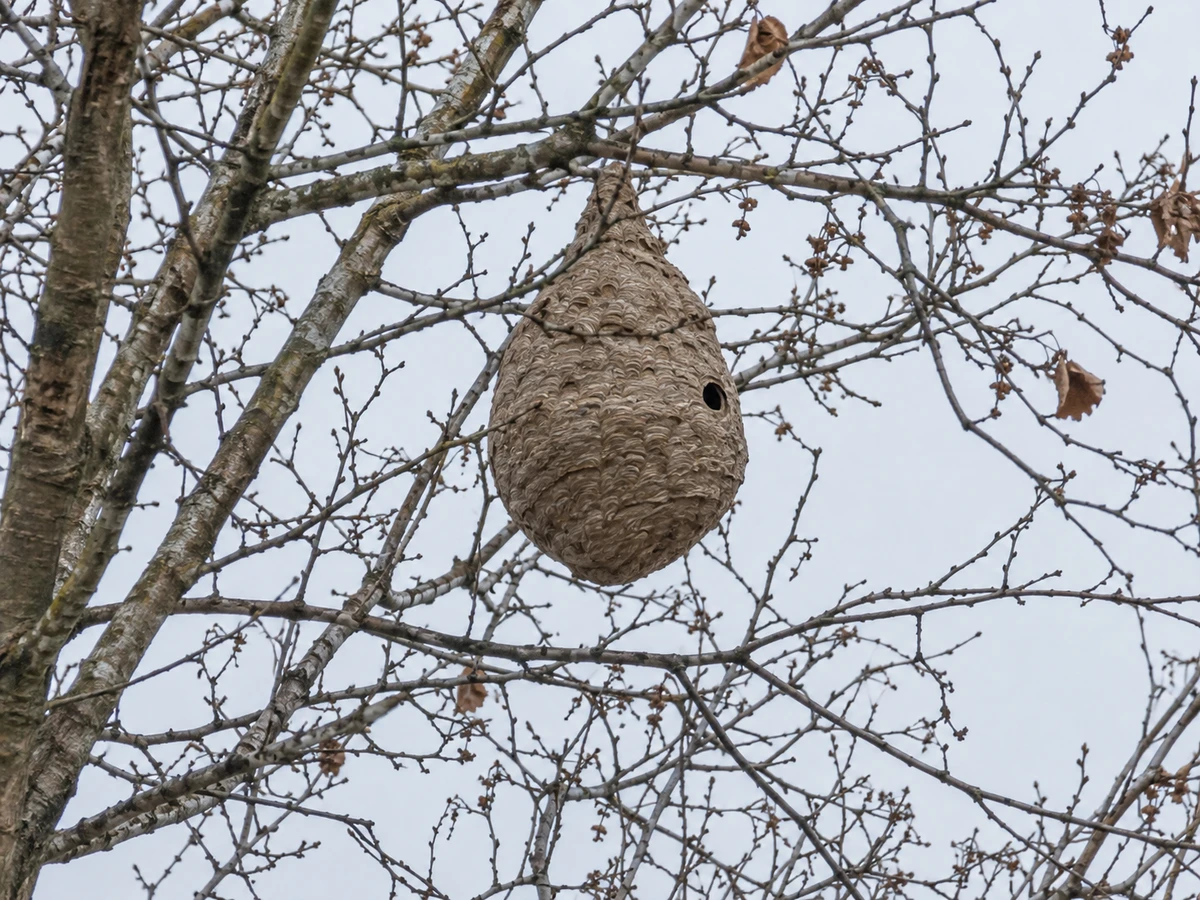
A nest 20 to 31 inches across (rugby-ball size), often 25 to 50 feet (8–15 m) up in a tree, that comes into view once the leaves fall.
🧭 What it means
A secondary Asian hornet nest: 2,000 to 6,000 individuals at the September–October peak, with a defense zone that can reach 16 feet.
✅ The proof: how to confirm
From a distance, count worker traffic for one minute: over 30 passes a minute during the day means a large fall nest.
⚠️ Caution
Not a homeowner job: call a licensed pest control operator (some counties or states help with removal costs), and never approach to measure the distance to the nest.
🧩 What to do next
- 1 Identify first: yellow-and-black, thin-waisted = wasp; rust/brick colored = European hornet (mostly harmless, leave it); black with yellow leg tips = Asian-type/giant hornet → report to authorities and do NOT DIY. Never kill fuzzy bees.
- 2 Decide DIY vs pro: treat it yourself only if the nest is small, low (no ladder), it is a wasp, and you are not allergic. Otherwise call a professional.
- 3 Suit up fully — beekeeping suit, veil and gloves, with wrists and ankles taped — and use a red-light headlamp (wasps cannot see red).
- 4 Treat at night (10–11 PM) when all wasps are back and sluggish: empty a 20-ft spray or foam into the nest entrance, then retreat along a clear, obstacle-free path.
- 5 For a nest inside a wall cavity, puff insecticide dust into the hole — NEVER seal the opening while the colony is alive, or they will push inside the house.
- 6 Wait 48 hours before removing or sealing. Reduce patio pressure with a selective trap placed about 30 feet from where you sit.
🛒 Products from our guides
-
Asian hornet selective bucket trap set
This nest belongs to a pro; your lever comes next spring: trapping the founding queen before she builds.
View on Amazon → -
Asian hornet trap
A trap designed for the Asian hornet, which generic wasp traps don’t always suit.
View on Amazon → -
Wasp and hornet lure refill
Attractant refill for selective queen trapping the following spring.
View on Amazon →
As an Amazon Associate we earn from qualifying purchases, at no extra cost to you.
Mosquitoes
4. Larvae in the rain barrel
👀 What you see
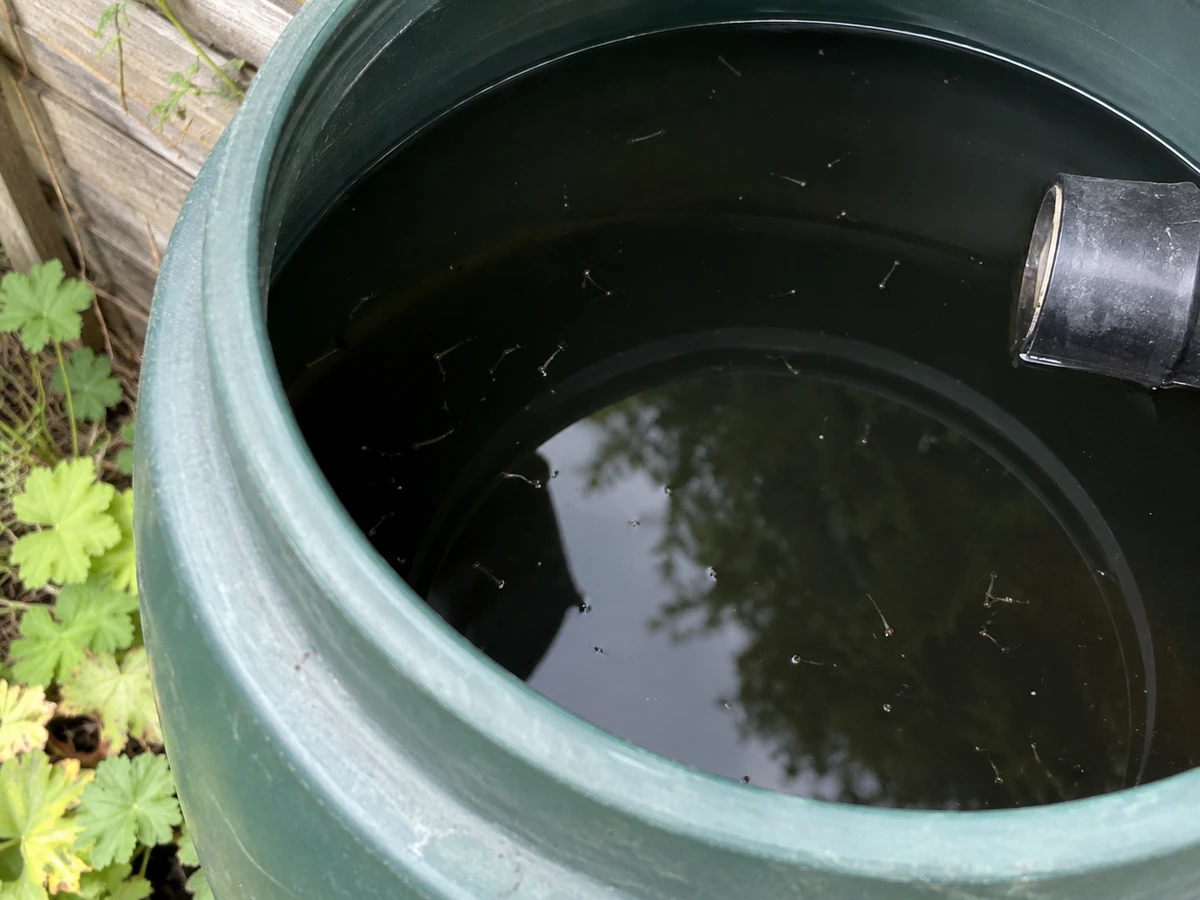
A rain barrel of still water whose lid lets water in but blocks the light; the eggs are stuck to the inside wall at the waterline, and larvae swim in the water.
🧭 What it means
An ideal breeding site: a female lays 100 to 300 eggs in one clutch, and in summer the cycle completes in under a week. The tiger mosquito has a range of about 500 feet: if it bites you, it was most likely born at your place or next door.
✅ The proof: how to confirm
Walk the breeding sites: rain barrel, pond without fish, storm drains, clogged gutters — any untreated water can hold larvae.
🧩 What to do next
- 1 Identify: black with white stripes biting during the day = tiger mosquito (Aedes); dull brown buzzing at night = common mosquito (Culex).
- 2 Kill larvae at the source: empty saucers, buckets and tires weekly, clean gutters, and cover or BTI-treat rain barrels and ponds.
- 3 Protect skin with an EPA/WHO-validated repellent (Picaridin, DEET, IR3535 or OLE/PMD). Skip bracelets, ultrasound and UV lamps — proven ineffective.
- 4 For babies, use nets first; apply topical repellent only by age (IR3535 from 2 months) and never on a child’s hands.
- 5 Indoors: screen windows with mesh under 1/16 inch, run a fan, and use a plug-in diffuser at night (unscented, not in a baby’s room).
- 6 Outdoors: a Thermacell or a simple fan aimed at the table keeps the patio usable.
🛒 Products from our guides
-
Mosquito Dunks (BTI)
They float and release BTI over 4 to 6 weeks even as the level changes: built for rain barrels.
View on Amazon → -
Summit Mosquito Bits (BTI granules)
Granules that act within 24 hours on the larvae in standing water, without treating the whole yard.
View on Amazon → -
Liquid BTI concentrate
For large sites such as a pond: it spreads across the whole surface, but isn’t meant for small containers.
View on Amazon →
As an Amazon Associate we earn from qualifying purchases, at no extra cost to you.
Yard & outdoors
5. Mounds of fine soil with no visible hole
👀 What you see
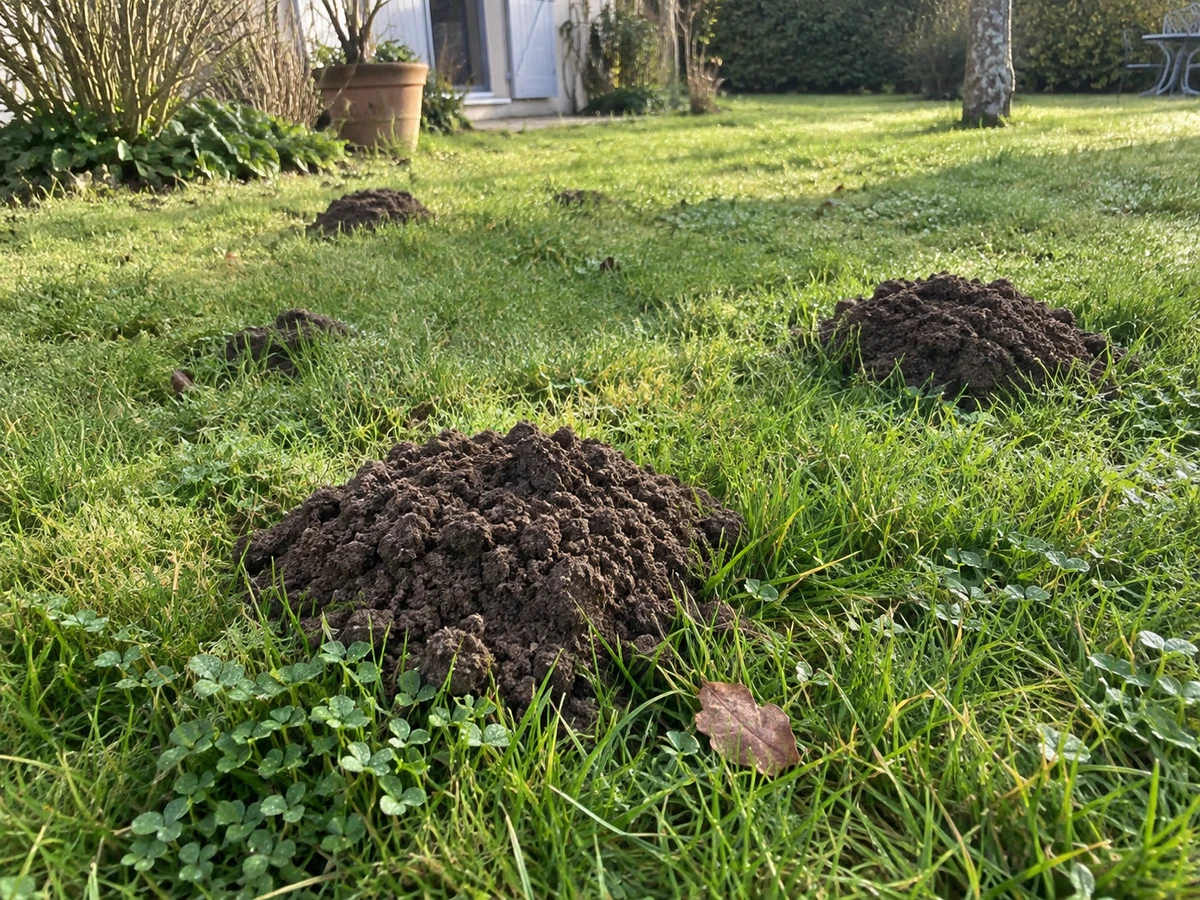
Mounds of fine soil in the lawn with no visible opening, the tunnels staying deep.
🧭 What it means
It’s a mole: it eats worms and grubs, not roots — the damage is cosmetic, it never eats your plants. A vole, by contrast, leaves openings at the surface, gnaws roots and yellows plants in patches.
✅ The proof: how to confirm
Pull on a yellowed plant: if it lifts out by hand with its roots gnawed, it’s a vole, not a mole.
🛒 Products from our guides
-
Mole barrier mesh to bury
Exclusion rather than elimination: it protects one specific area (flower bed, new lawn) without touching the rest of the yard.
View on Amazon → -
Wire baskets for roots and bulbs
If the yellowed plant lifts out by hand, it’s a vole: protect the roots of your plantings, still by exclusion.
View on Amazon →
As an Amazon Associate we earn from qualifying purchases, at no extra cost to you.
Yard & outdoors
6. Tall grass and a woodpile at the edge of the yard
👀 What you see
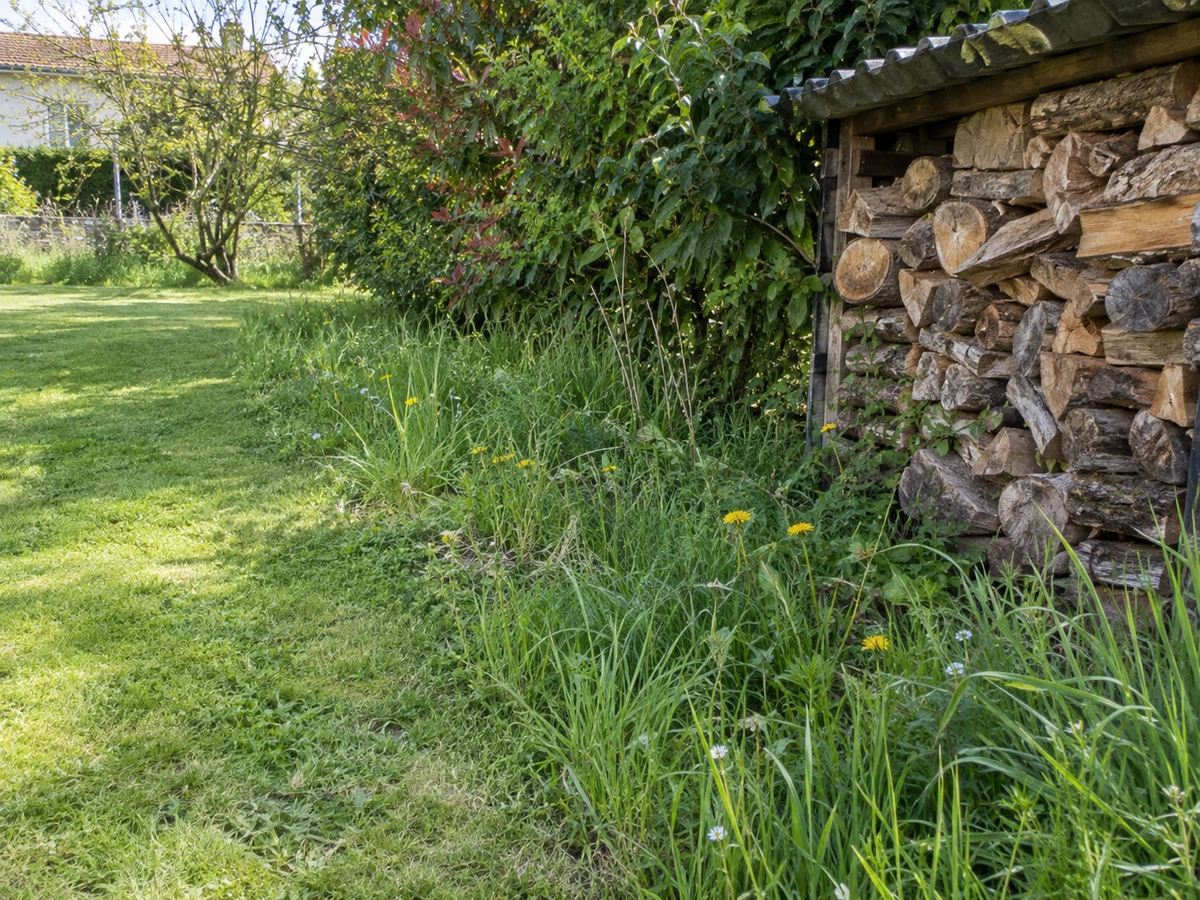
A transition zone in the yard: the edge of the woods, tall grass, a woodpile, the base of a hedge — the opposite of a mowed, sunny lawn.
🧭 What it means
That’s where ticks concentrate; they are nearly absent from a mowed lawn. Targeted work on these zones beats treating the whole yard.
✅ The proof: how to confirm
Activity peaks from March to June: that’s the window to work on these zones, before the summer crowds.
🛒 Products from our guides
-
Cordless string trimmer
To cut back tall grass and edges: ticks are nearly absent from a mowed, sunny lawn.
View on Amazon → -
Tick remover tool
To cleanly remove an attached tick after time along the edge, in tall grass or near the woodpile.
View on Amazon →
As an Amazon Associate we earn from qualifying purchases, at no extra cost to you.