
Pests in the Garage: Chewed Wires, Webs and Mouse Entry Points
Under the hood, at the bottom of the door, in the corners: here are the signs pests leave behind in a garage.
Pests covered: mice & rats, household insects.
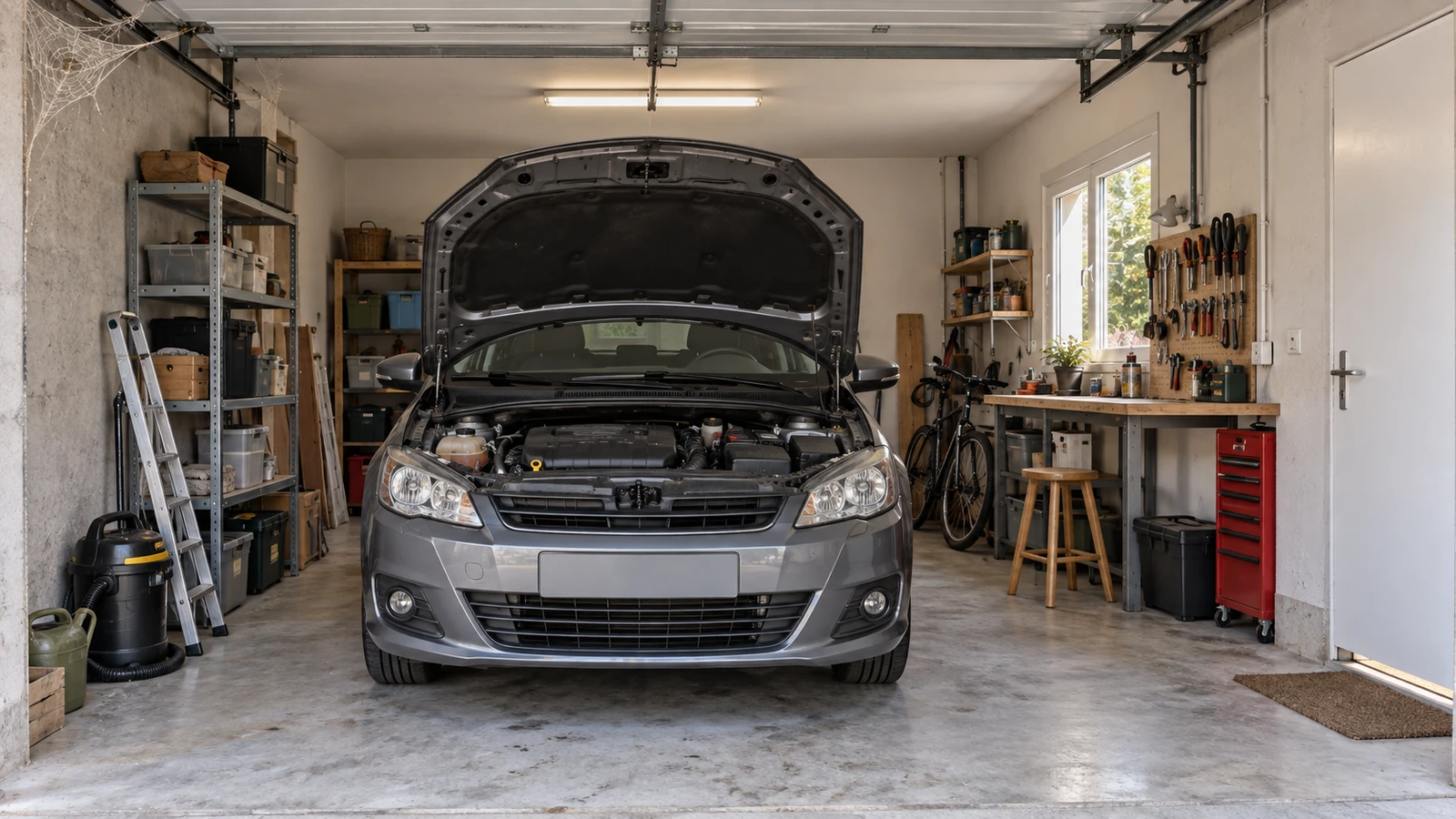
Mice & rats
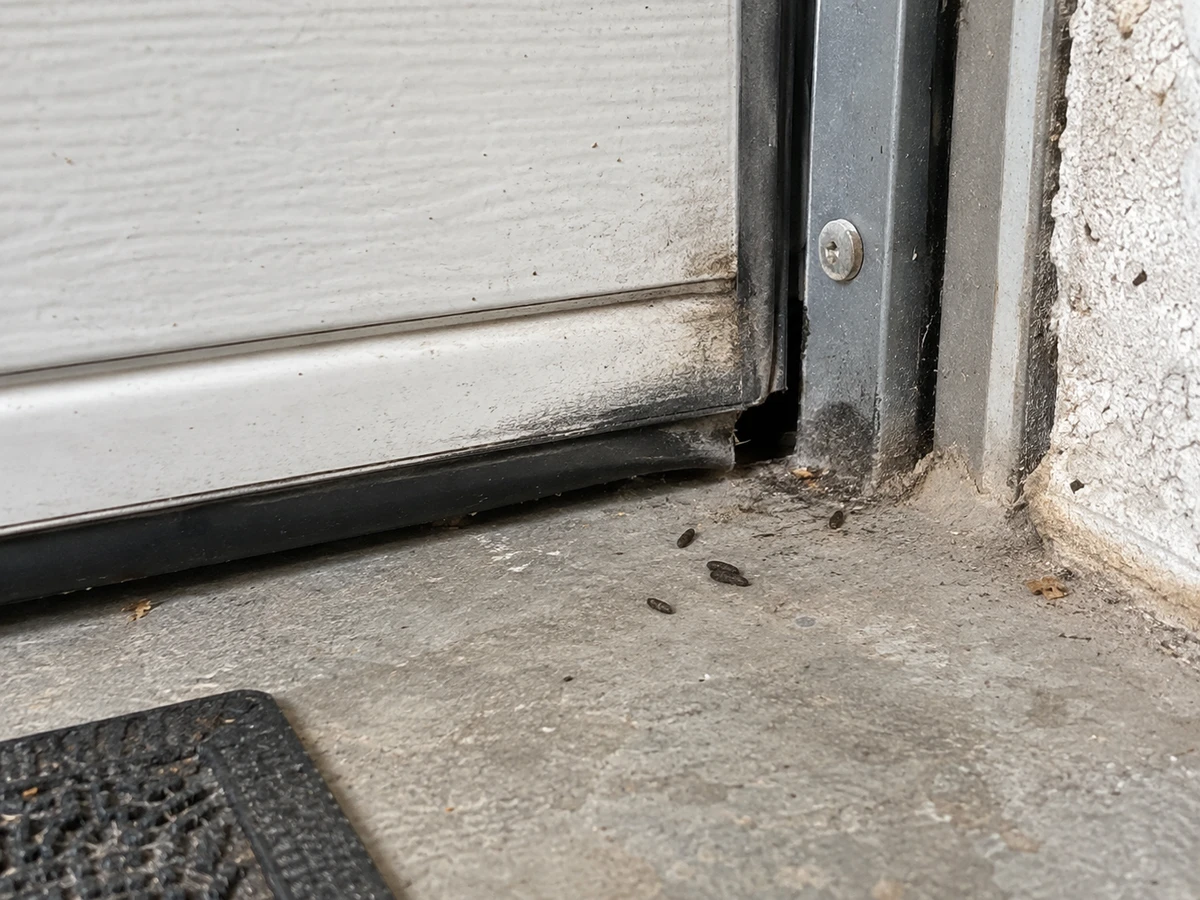
1. A gap under the garage door edged with greasy marks
👀 What you see
A 3/8 to 3/4 in (1–2 cm) gap at the corners of the door’s bottom seal, or a small opening whose edge is darkened by greasy smudges, with rice-shaped droppings, fine sawdust or nesting material nearby.
🧭 What it means
A mouse gets through about 1/4 inch (6 mm) — a ballpoint pen — and a rat through about 3/4 inch (20 mm): if the head fits, the body follows. The greasy marks come from the oils in the fur, left by repeated passes.
✅ The proof: how to confirm
Dust flour or talc in front of the opening: footprints and a tail drag the next morning; or stuff it with crumpled paper — moved or gnawed within 48 hours, the passage is active.
⚠️ Caution
Seal while you trap, not before: a mouse shut inside gnaws more and can die in a wall (a smell for weeks).
🧩 What to do next
- 1 Mouse or rat? Rice-grain droppings pointed at both ends and scattered = mouse; olive-pit droppings grouped in one spot = rat. Sprinkle flour overnight to read footprints (~⅜ in = mouse, ~¾ in = rat).
- 2 Seal entry points FIRST with steel wool packed into holes and held with caulk — if a ballpoint pen fits, a mouse fits. Never use expanding foam (they chew through it).
- 3 Set snap or electric traps along the walls, baited with peanut butter (not cheese). Use rat-sized traps for rats — a mouse trap will not stop one.
- 4 For heavy infestations, place rodenticide only inside a locked, tamper-resistant bait station — never loose pellets.
- 5 Never vacuum droppings (Hantavirus risk): wet them with diluted bleach (1:10), wear gloves and an N95, bag, then disinfect surfaces.
- 6 Avoid glue traps (cruel and ineffective) and store all food in glass or metal containers.
🛒 Products from our guides
-
Steel wool for rodent-proofing
Rodents can’t gnaw through it, unlike expanding foam used alone.
View on Amazon → -
Garage door bottom seal
The door’s bottom seal is the number one entry point.
View on Amazon → -
1/4-inch hardware cloth
Closes vents and gaps without blocking airflow.
View on Amazon →
As an Amazon Associate we earn from qualifying purchases, at no extra cost to you.
Mice & rats
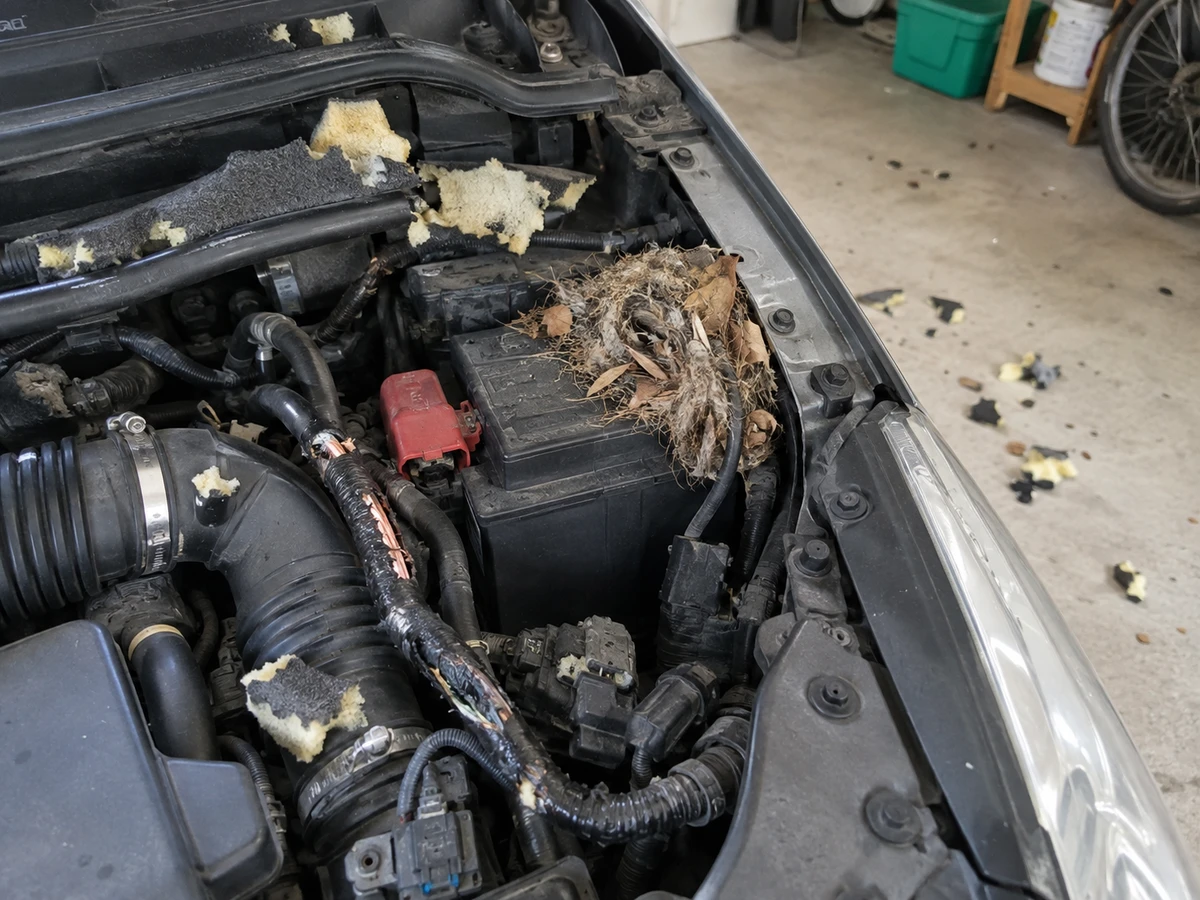
2. Bits of foam under the car and chewed wires
👀 What you see
Bits of foam on the floor under the car, shredded under-hood insulation, a nest of fibers and leaves against the battery; on the dashboard, multiple warning lights and a car that won’t start after a night in the garage.
🧭 What it means
Soy-based wire insulation draws rodents. Mouse: rice-grain droppings, low harnesses chewed; rat: olive-pit droppings, clustered, hoses and thick cables; squirrel (the top US culprit, with rats): acorn shells and stashed food, damage up high, active by day.
✅ The proof: how to confirm
Identify the culprit from the droppings and signs around the car before choosing your protection.
🧩 What to do next
- 1 Mouse or rat? Rice-grain droppings pointed at both ends and scattered = mouse; olive-pit droppings grouped in one spot = rat. Sprinkle flour overnight to read footprints (~⅜ in = mouse, ~¾ in = rat).
- 2 Seal entry points FIRST with steel wool packed into holes and held with caulk — if a ballpoint pen fits, a mouse fits. Never use expanding foam (they chew through it).
- 3 Set snap or electric traps along the walls, baited with peanut butter (not cheese). Use rat-sized traps for rats — a mouse trap will not stop one.
- 4 For heavy infestations, place rodenticide only inside a locked, tamper-resistant bait station — never loose pellets.
- 5 Never vacuum droppings (Hantavirus risk): wet them with diluted bleach (1:10), wear gloves and an N95, bag, then disinfect surfaces.
- 6 Avoid glue traps (cruel and ineffective) and store all food in glass or metal containers.
🛒 Products from our guides
-
Peppermint rodent repellent pouches
A supplement in the engine bay and cabin: the smell bothers rodents but fades in 3 to 5 days, so refresh weekly.
View on Amazon → -
Capsaicin rodent repellent tape
Wrapped around the most exposed harnesses.
View on Amazon → -
Steel wool for rodent-proofing
To seal the garage’s entry holes.
View on Amazon →
As an Amazon Associate we earn from qualifying purchases, at no extra cost to you.
Household insects
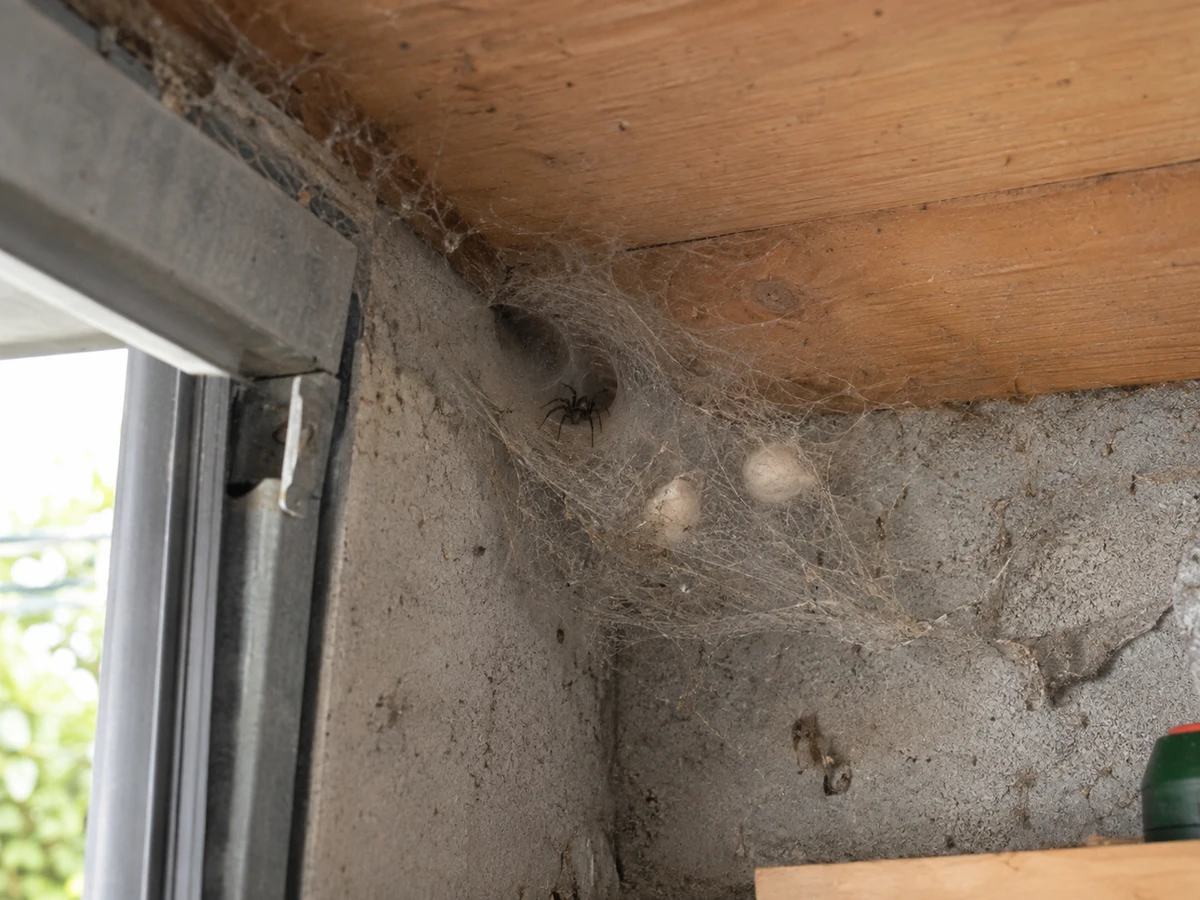
3. Sheet webs and egg sacs in the garage corner
👀 What you see
A sheet web in a spot nobody disturbs — a garage corner, behind the washing machine, under the stairs — and egg sacs in the high corners or under window ledges.
🧭 What it means
These are the females that stayed put, laying their fall egg sacs; each sac holds several dozen eggs.
✅ The proof: how to confirm
Check the high corners and behind low furniture in November: every egg sac you vacuum up means dozens fewer young spiders in spring.
🛒 Products from our guides
-
Long crevice tool for your vacuum
A slim nozzle to pull webs and egg sacs out of corners: removing them is the only thing that lowers next year’s population.
View on Amazon → -
Spider glue traps
Set along the walls, they give a measure: if they fill up, the population is real; if they stay empty, there was nothing to treat.
View on Amazon → -
Concentrated spider repellent
On the bottom 8 inches (20 cm) of wall and the floor joint, once at the start of fall, rather than repeated spraying mid-room.
View on Amazon →
As an Amazon Associate we earn from qualifying purchases, at no extra cost to you.