
Signs of Pests in the Kitchen: How to Identify Them
From the cabinet toe-kick to the bag of flour, here are the signs to look for in a kitchen. For each one: a photo, what it means, how to confirm it and what to do next.
Pests covered: cockroaches, ants, flies & gnats, mice & rats, household insects.

Cockroaches
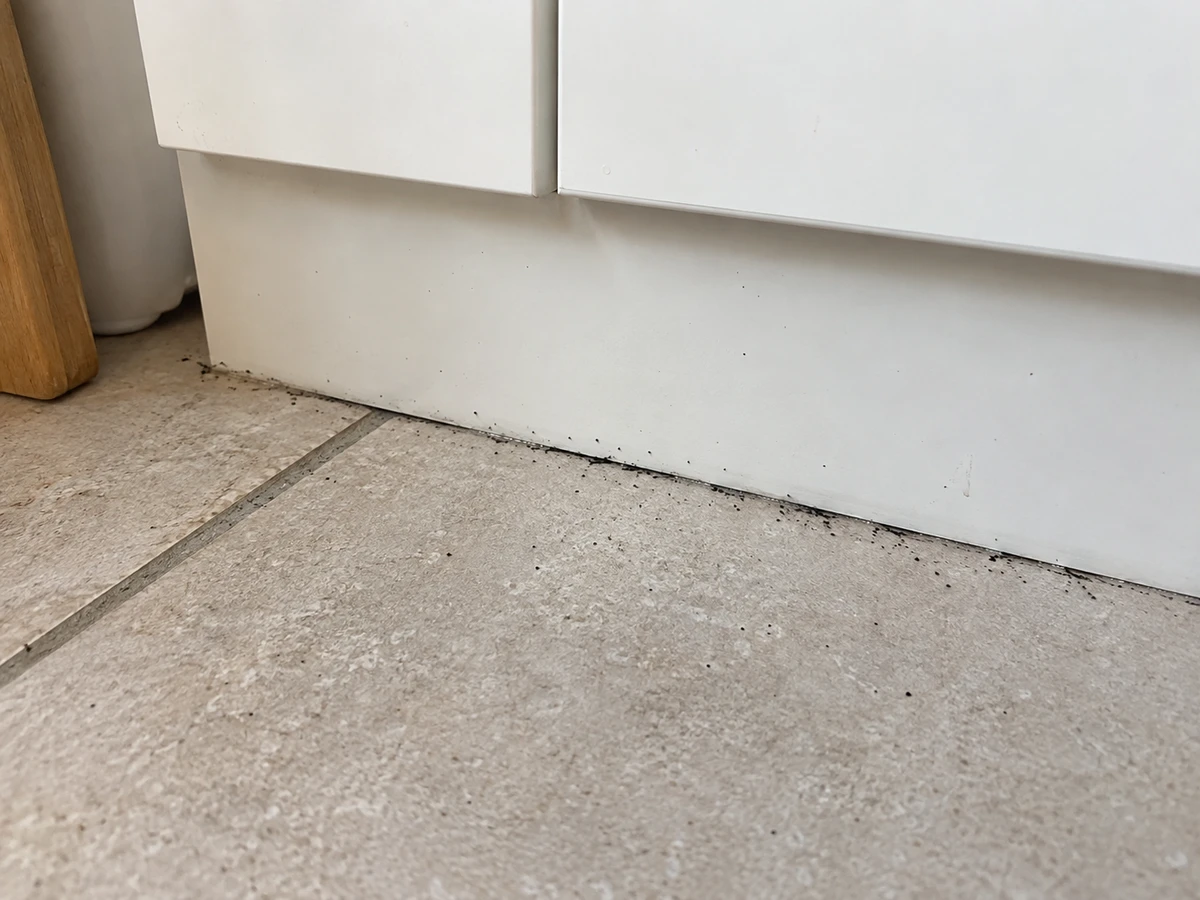
1. Black “ground pepper” streaks along a cabinet edge
👀 What you see
Tiny black specks, like ground pepper, lined up in ink-like smears along a cabinet edge or the toe-kick under the kitchen cabinets. Fresh droppings are glossy; old ones are matte and dry.
🧭 What it means
These are cockroach droppings: a few scattered specks mark an occasional travel route, an ink-like smear a runway used every night, a concentrated peppered patch a daytime resting spot less than 3 feet from the harborage. Mouse droppings are distinctly larger (about 1/8 to 1/4 inch) and rice-shaped.
Chart: compare the droppings
Indicative chart based on our cockroach and mice & rats guides.
✅ The proof: how to confirm
Run a damp fingertip over them: a fresh dropping is glossy and smears. Photograph the spot, clean it and look again in a week — if it comes back, the infestation is live.
🧩 What to do next
- 1 Identify the species: small light-brown roach with two dark stripes behind the head = German (kitchen/bathroom); large shiny black = Oriental (basements, drains).
- 2 Place sticky monitor traps to find the harborage — behind the fridge, under the sink, inside cabinet hinges and around motors.
- 3 Apply pea/lentil-sized gel drops in those hidden spots. Never spray: spray scatters the colony and breeds resistance.
- 4 Add an IGR (insect growth regulator) so surviving nymphs cannot mature — this breaks the cycle.
- 5 Clean with white vinegar or a neutral cleaner during treatment. Bleach repels roaches away from the bait and makes it fail.
- 6 Replenish gel as it is eaten; expect 2–3 weeks. In an apartment, push for a coordinated building-wide treatment.
🛒 Products from our guides
-
Rechargeable LED inspection flashlight
Slim enough to slide behind a refrigerator, bright enough to raise a shadow off a dropping in raking light.
View on Amazon → -
Cockroach monitoring glue traps
Nothing toxic: numbered and dated, they show where roaches travel and whether the count is falling.
View on Amazon → -
Cockroach gel bait, fine-tip syringe
Cascade effect: a roach that eats the gel contaminates the ones still hiding — something a spray can’t do.
View on Amazon →
As an Amazon Associate we earn from qualifying purchases, at no extra cost to you.
Cockroaches
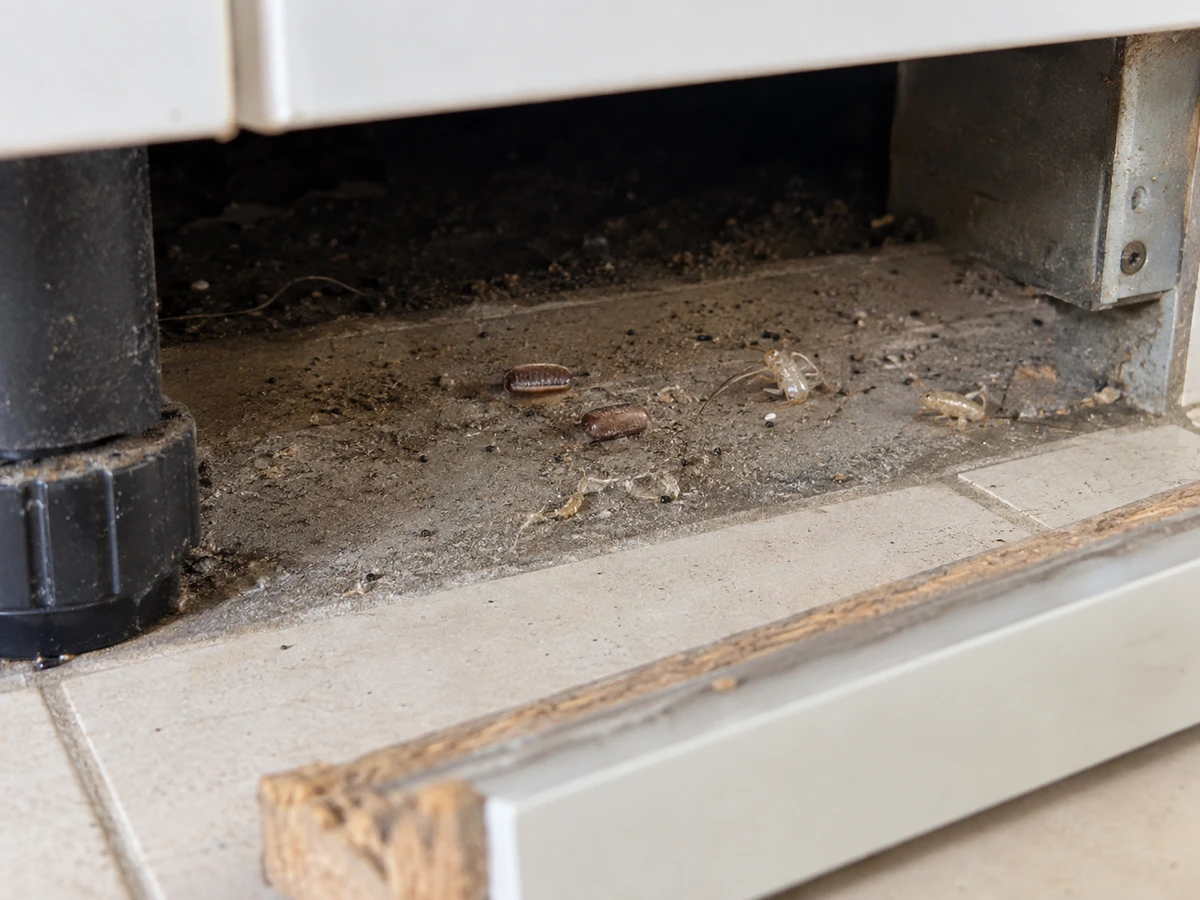
2. Ridged brown capsules and see-through shed skins behind the toe-kick
👀 What you see
Behind the kick board under the base cabinets, in a hollow channel about 4 inches high: ridged brown egg cases about 1/4 to 5/16 in (6–8 mm) long, empty or full, translucent brittle shed skins, and droppings. A musty, faintly sweet smell when you open it up.
🧭 What it means
Egg cases mean active breeding at this exact spot: you are at the harborage. Shed skins mean nymphs are growing up on site; the sweet smell is the concentrated aggregation pheromone of a large harborage.
✅ The proof: how to confirm
Do the night pass between about 1 and 3 a.m.: come in quietly, stand still in the dark for ten seconds, then hit the switch — the way everything runs points at the harborage.
⚠️ Caution
Don’t spray or vacuum the harborage: the survivors scatter and start two or three new groups elsewhere.
🧩 What to do next
- 1 Identify the species: small light-brown roach with two dark stripes behind the head = German (kitchen/bathroom); large shiny black = Oriental (basements, drains).
- 2 Place sticky monitor traps to find the harborage — behind the fridge, under the sink, inside cabinet hinges and around motors.
- 3 Apply pea/lentil-sized gel drops in those hidden spots. Never spray: spray scatters the colony and breeds resistance.
- 4 Add an IGR (insect growth regulator) so surviving nymphs cannot mature — this breaks the cycle.
- 5 Clean with white vinegar or a neutral cleaner during treatment. Bleach repels roaches away from the bait and makes it fail.
- 6 Replenish gel as it is eaten; expect 2–3 weeks. In an apartment, push for a coordinated building-wide treatment.
🛒 Products from our guides
-
Cockroach gel bait, fine-tip syringe
The fine tip puts a dot deep in a hinge cup or against a pipe collar without dismantling anything.
View on Amazon → -
Insect growth regulator (IGR) for cockroaches
Egg cases present, long-standing colony: a growth regulator reaches the generation the bait can’t.
View on Amazon → -
Cockroach monitoring glue traps
Nothing toxic: they show where roaches travel and whether the treatment is working.
View on Amazon →
As an Amazon Associate we earn from qualifying purchases, at no extra cost to you.
Cockroaches
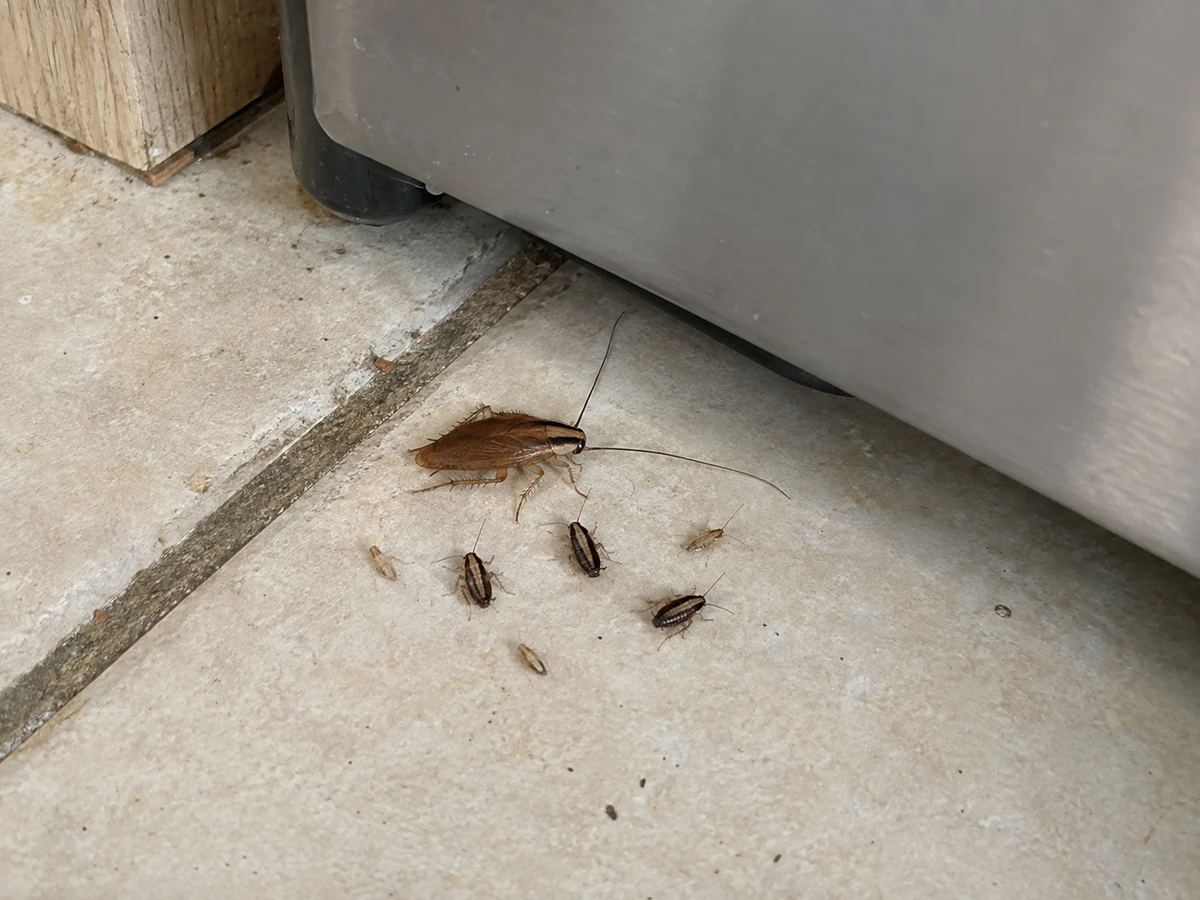
3. See-through baby roaches, or a roach out in broad daylight
👀 What you see
Small, translucent cockroaches about 1/8 inch long, mixed with roaches of different sizes near the sink or fridge — or a brown roach darting under the dishwasher in the middle of the day.
🧭 What it means
Baby cockroaches prove the colony is breeding in your home; a roach out in daylight means the hiding spots are overcrowded (hundreds in the walls). One cockroach seen at night usually means 10 to 50 more in hiding.
✅ The proof: how to confirm
Set 3 sticky traps (under the sink, behind the fridge, in the bathroom) and count after 48 hours: 0–1, possible isolated case; 2–5, early infestation; more than 5, established colony.
⚠️ Caution
Don’t crush a female carrying an egg case, and skip the spray: it scatters the colony without reaching it.
🧩 What to do next
- 1 Identify the species: small light-brown roach with two dark stripes behind the head = German (kitchen/bathroom); large shiny black = Oriental (basements, drains).
- 2 Place sticky monitor traps to find the harborage — behind the fridge, under the sink, inside cabinet hinges and around motors.
- 3 Apply pea/lentil-sized gel drops in those hidden spots. Never spray: spray scatters the colony and breeds resistance.
- 4 Add an IGR (insect growth regulator) so surviving nymphs cannot mature — this breaks the cycle.
- 5 Clean with white vinegar or a neutral cleaner during treatment. Bleach repels roaches away from the bait and makes it fail.
- 6 Replenish gel as it is eaten; expect 2–3 weeks. In an apartment, push for a coordinated building-wide treatment.
🛒 Products from our guides
-
Cockroach monitoring glue traps
Diagnosis first, then monitoring: how many roaches in 48 hours, then whether the treatment is working.
View on Amazon → -
Advion Cockroach Gel Bait (Syngenta)
Indoxacarb gel with a cascade effect: a forager carries it back and contaminates the harborage.
View on Amazon → -
Maxforce FC Magnum Cockroach Bait Gel (Bayer)
Larger 33 g syringe with a fipronil mode of action, for infestations spread over several rooms.
View on Amazon →
As an Amazon Associate we earn from qualifying purchases, at no extra cost to you.
Ants
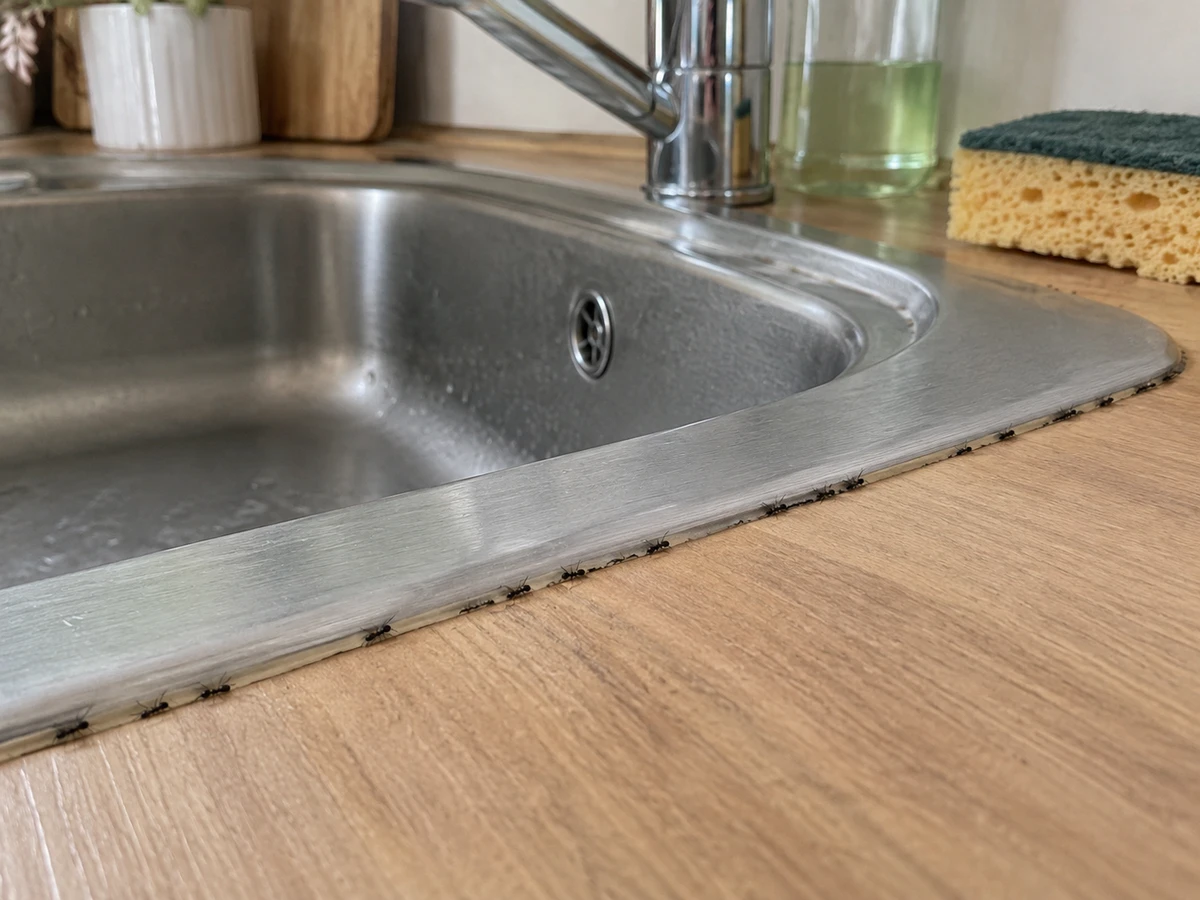
4. A single-file line of ants along the edge of the sink
👀 What you see
A line of small ants following exactly the same edge of the sink or countertop, to the millimeter, and back in the same spot the day after you clean.
🧭 What it means
They follow a pheromone trail that soaks into grout, baseboards and painted wood and resists soapy water: an active trail can persist up to 3 to 4 weeks. Cleaning doesn’t touch the colony.
✅ The proof: how to confirm
If a new trail forms within 24 to 72 hours of treatment, the queen is alive and the colony is just taking another route.
⚠️ Caution
Never spray a line of workers: only a bait gel reaches the queen.
🧩 What to do next
- 1 Identify the species first: tiny reddish ants living inside walls = pharaoh; black foragers coming from outdoors = garden ants; large black ants with coarse sawdust = carpenter ants. The method depends on it.
- 2 Do not spray. Contact spray kills visible workers but never the queen, and with pharaoh ants it can split the colony (budding) and make things worse.
- 3 Wipe active trails with undiluted white vinegar to erase the pheromone highway, then place lentil-sized bait-gel drops directly on those trails, every 4–6 inches.
- 4 Leave the gel undisturbed and let workers carry it back to the nest. Replenish the drops as they are eaten (a good appetite means it is working).
- 5 For an accessible outdoor nest, puff deltamethrin dust into the openings; for carpenter ants, also find and fix the moisture source feeding them.
- 6 Once activity stops, seal entry cracks and pipe gaps with silicone caulk to stop the next generation following the same route.
🛒 Products from our guides
-
Advion Ant Gel (Syngenta)
Slow-acting: workers carry the bait back to the queen, so the whole colony is targeted.
View on Amazon → -
Maxforce Quantum (Bayer)
Liquid texture that tiny ants, such as pharaoh ants, take when they ignore a thick gel.
View on Amazon → -
Cleaning vinegar (gallon)
Temporarily erases the trail and opens a window of disorientation to place the bait gel.
View on Amazon →
As an Amazon Associate we earn from qualifying purchases, at no extra cost to you.
Flies & gnats
5. A small cloud of tan, red-eyed flies over the fruit bowl
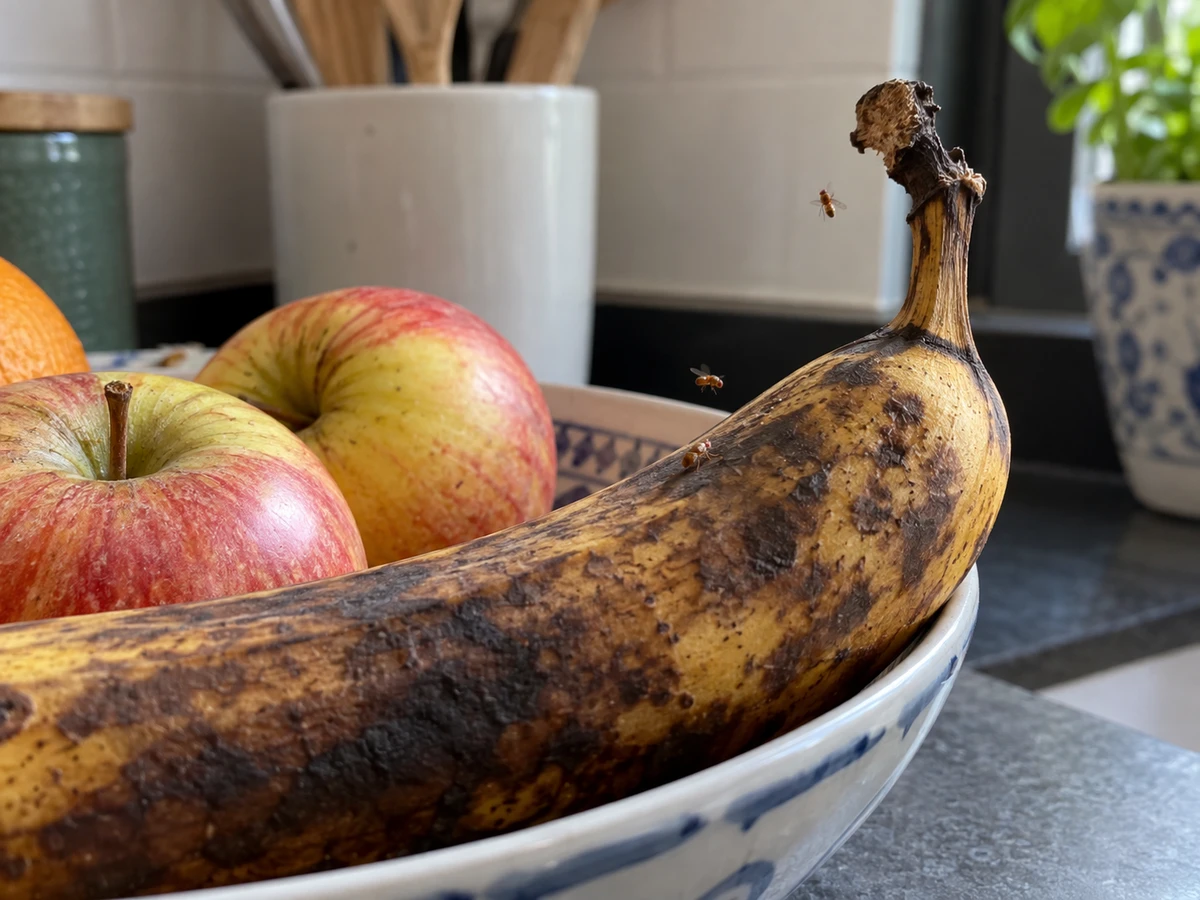
👀 What you see
Small flies with a tan-brown body and bright red eyes flying briskly around the fruit bowl, a browning banana or the compost bin under the sink.
🧭 What it means
These are fruit flies, drawn to fermenting sugars. Egg to adult takes 8 days at 77°F: a new wave can hatch from a piece of fruit or a drain a week later.
✅ The proof: how to confirm
A glass of apple cider vinegar with a drop of dish soap, set 12 to 20 inches from the fruit bowl, catches the bulk of them in 24 to 48 hours; if it stays empty, they aren’t fruit flies.
🧩 What to do next
- 1 Identify the fly: small brown by the fruit bowl = fruit fly; metallic green/blue = blow fly; gray and striped on food = house fly; checkerboard pattern in the attic in autumn = cluster fly.
- 2 A sudden swarm of blow flies means a hidden carcass (mouse, bird) in a wall or attic — find and remove it first; the flies leave in 3–5 days.
- 3 For fruit flies: remove ripe fruit and coffee grounds, clean the drain biofilm, and set an apple-cider-vinegar + dish-soap trap.
- 4 For house flies: bag and wash out the trash, screen windows with mesh under 1/16 inch, and add a UV unit or a fly ribbon.
- 5 For barns and large spaces: spread cyromazine larvicide on the breeding matter (manure/bedding) and place attractant bait on resting walls.
- 6 In commercial kitchens, use glue-board units only above food prep (no electrocution) and keep a capture log for inspections.
🛒 Products from our guides
-
Terro Fruit Fly Trap
Ready to use and discreet by the fruit bowl, with no recipe to mix.
View on Amazon → -
Decorative apple-shaped fruit fly trap
No noticeable smell: it works for a month near the bowl.
View on Amazon → -
Enzymatic drain cleaner gel
If they keep coming back despite traps, the larvae are often developing in the drain biofilm.
View on Amazon →
As an Amazon Associate we earn from qualifying purchases, at no extra cost to you.
Mice & rats
6. Rice-shaped droppings along the baseboard
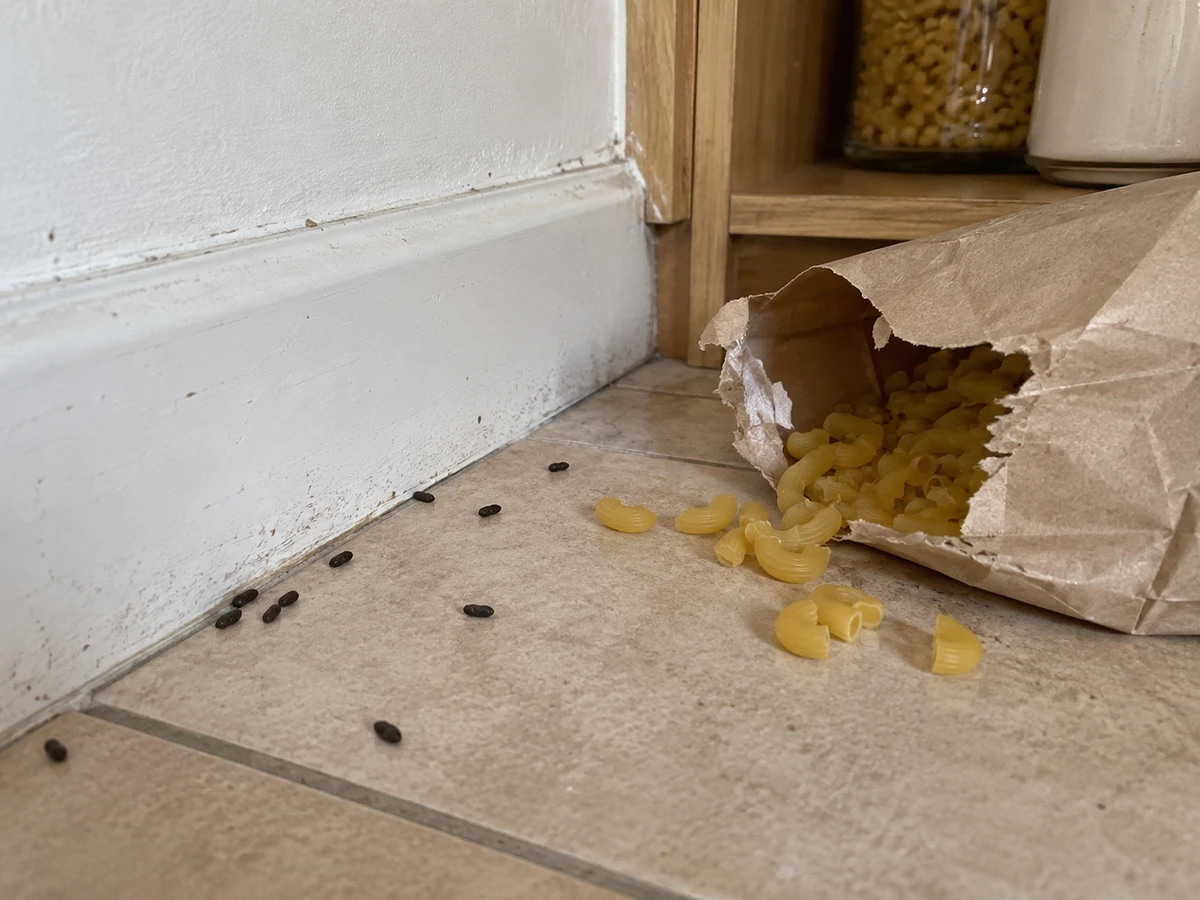
👀 What you see
Black droppings 1/8 to 1/4 inch long, pointed at both ends, scattered along the baseboard or in the pantry; a ripped-open box of pasta, a sharp urine smell behind the fridge.
🧭 What it means
The house mouse’s signature (50 to 80 droppings a day). Rat droppings are much bigger (1/2 to 3/4 inch, blunt ends, grouped); cockroach droppings look like ground pepper.
✅ The proof: how to confirm
Sprinkle a little flour along the wall at night: in the morning, a print of about 3/8 inch means a mouse, about 3/4 inch a rat.
⚠️ Caution
Never vacuum mouse droppings (hantavirus): wet them first with diluted bleach (1:10) or a disinfectant and let it sit 10 minutes.
🧩 What to do next
- 1 Mouse or rat? Rice-grain droppings pointed at both ends and scattered = mouse; olive-pit droppings grouped in one spot = rat. Sprinkle flour overnight to read footprints (~⅜ in = mouse, ~¾ in = rat).
- 2 Seal entry points FIRST with steel wool packed into holes and held with caulk — if a ballpoint pen fits, a mouse fits. Never use expanding foam (they chew through it).
- 3 Set snap or electric traps along the walls, baited with peanut butter (not cheese). Use rat-sized traps for rats — a mouse trap will not stop one.
- 4 For heavy infestations, place rodenticide only inside a locked, tamper-resistant bait station — never loose pellets.
- 5 Never vacuum droppings (Hantavirus risk): wet them with diluted bleach (1:10), wear gloves and an N95, bag, then disinfect surfaces.
- 6 Avoid glue traps (cruel and ineffective) and store all food in glass or metal containers.
🛒 Products from our guides
-
Reusable mouse snap traps
A strong, clean-triggering snap trap: the inexpensive start for an early infestation, washable and reusable.
View on Amazon → -
Victor electronic mouse trap
No-touch, bloodless kill: hygienic in a kitchen and easier for the squeamish.
View on Amazon → -
Steel wool for rodent-proofing
The one material mice can’t gnaw through: it closes entry points for good.
View on Amazon →
As an Amazon Associate we earn from qualifying purchases, at no extra cost to you.
Household insects
7. Silky threads in the bag of flour
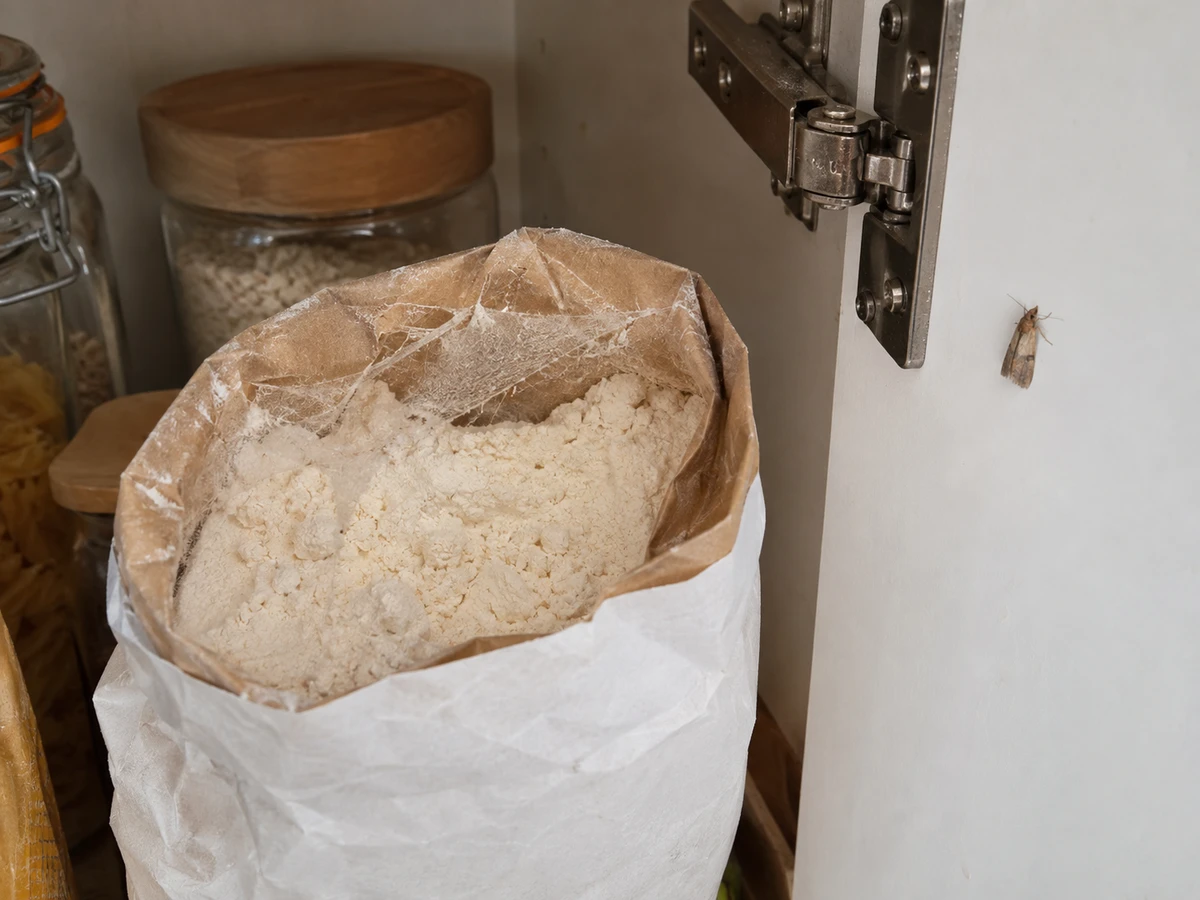
👀 What you see
Small beige moths in the kitchen, and silky threads and clumped flour inside a bag of flour or rice in the pantry.
🧭 What it means
Pantry moths: an infested package came into the pantry, almost always from the store. The food is lost, but there is no toxic risk.
✅ The proof: how to confirm
Go through the whole pantry (rice, flour, dried fruit, pet food, spices): threads in several packages mean it’s time to act; a pheromone trap measures the infestation.
⚠️ Caution
Tossing only the visibly infested bag isn’t enough: one forgotten package restarts the cycle in three weeks.
🛒 Products from our guides
-
Pantry moth pheromone traps
They catch the males: they measure the infestation and bring it down, but don’t replace going through the pantry.
View on Amazon → -
Airtight food storage containers
After the sort, what’s clean goes into sealed containers: an infested package can no longer reach the others.
View on Amazon → -
Bright LED flashlight
To check every package down to the bottom for silky threads and clumped flour.
View on Amazon →
As an Amazon Associate we earn from qualifying purchases, at no extra cost to you.