
Small Bugs in the Bathroom: Identify Them by Their Signs
Sink, tub, shower: here are the small bugs you run into in a bathroom and the signs that tell them apart.
Pests covered: ants, flies & gnats, household insects.
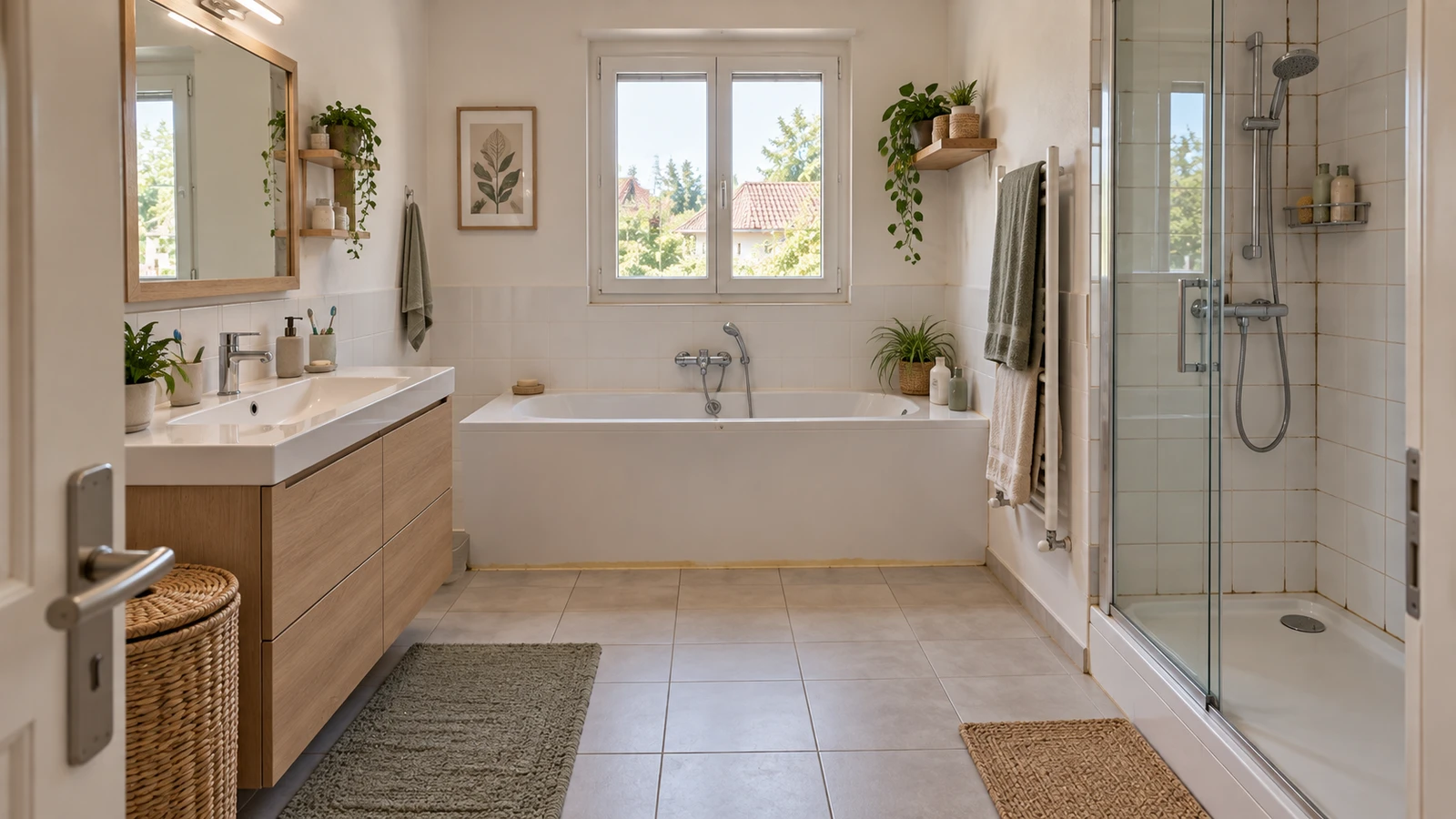
Ants
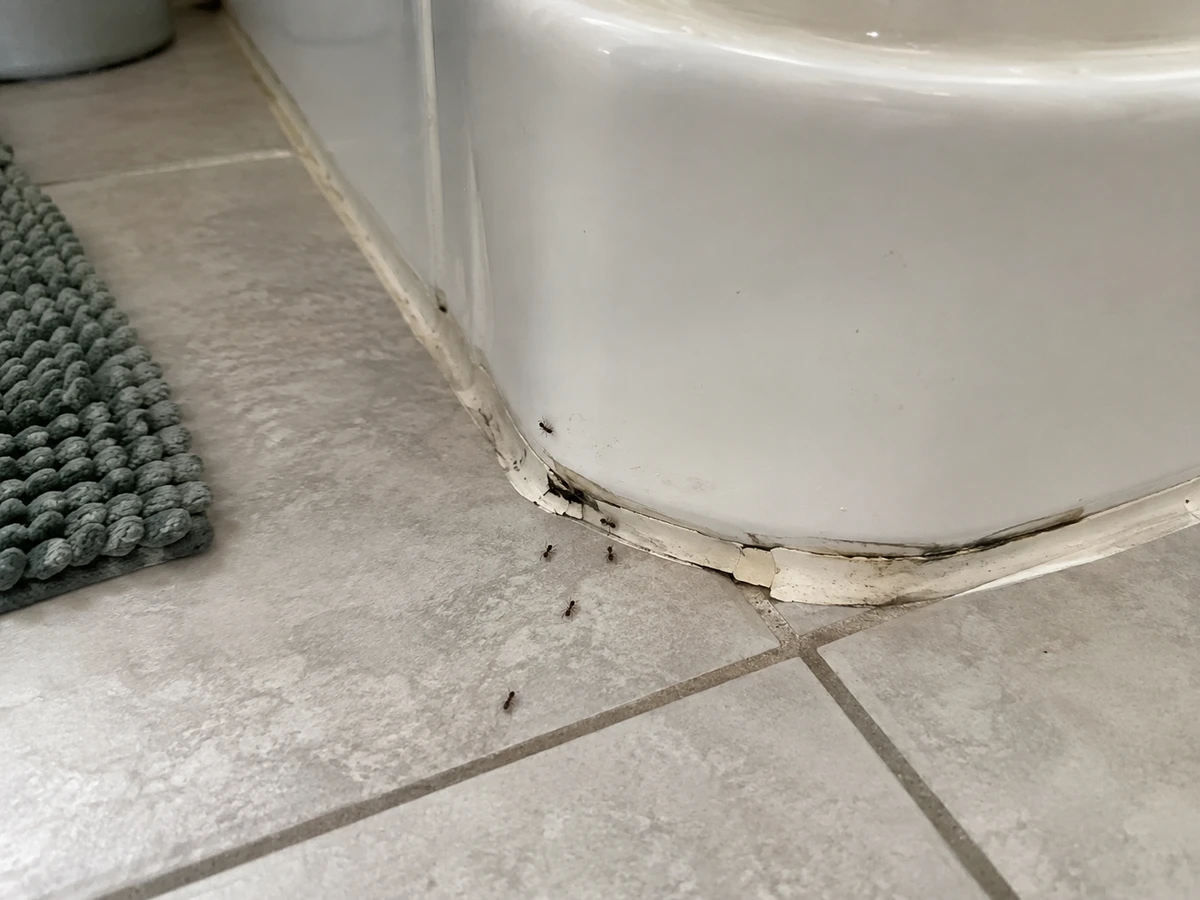
1. Ants coming out of the bathtub caulk
👀 What you see
Ants always coming out of the same spot in a loose silicone caulk bead at the base of the tub or shower pan, with a bubble, a blackened corner or mold.
🧭 What it means
A caulk bead isn’t a nest but a damp corridor to water: the colony is elsewhere (wall, slab, outdoors). On a floor grout line, on the other hand, small piles of fine dust or sand next to the joint point to a possible nest under the tile.
✅ The proof: how to confirm
Scratch the joint with a fingernail and look for piles of fine sand: floor grout that crumbles points to a nest under the tile, a simple loose caulk bead to a passage.
⚠️ Caution
Don’t reseal the joint while ants are still coming through: they’ll pop out a foot (30 cm) away or inside the wall.
🧩 What to do next
- 1 Identify the species first: tiny reddish ants living inside walls = pharaoh; black foragers coming from outdoors = garden ants; large black ants with coarse sawdust = carpenter ants. The method depends on it.
- 2 Do not spray. Contact spray kills visible workers but never the queen, and with pharaoh ants it can split the colony (budding) and make things worse.
- 3 Wipe active trails with undiluted white vinegar to erase the pheromone highway, then place lentil-sized bait-gel drops directly on those trails, every 4–6 inches.
- 4 Leave the gel undisturbed and let workers carry it back to the nest. Replenish the drops as they are eaten (a good appetite means it is working).
- 5 For an accessible outdoor nest, puff deltamethrin dust into the openings; for carpenter ants, also find and fix the moisture source feeding them.
- 6 Once activity stops, seal entry cracks and pipe gaps with silicone caulk to stop the next generation following the same route.
🛒 Products from our guides
-
Ant gel bait in a syringe
The only format you can place in micro-drops in the hollow of a joint, or on a vertical surface, without it running.
View on Amazon → -
Closed ant bait stations
Same active ingredient, with the bait out of reach of children and pets in high-traffic areas.
View on Amazon → -
Mold-resistant bathroom silicone caulk
To redo the loose bead — only after 10 to 15 days without a single ant.
View on Amazon →
As an Amazon Associate we earn from qualifying purchases, at no extra cost to you.
Flies & gnats
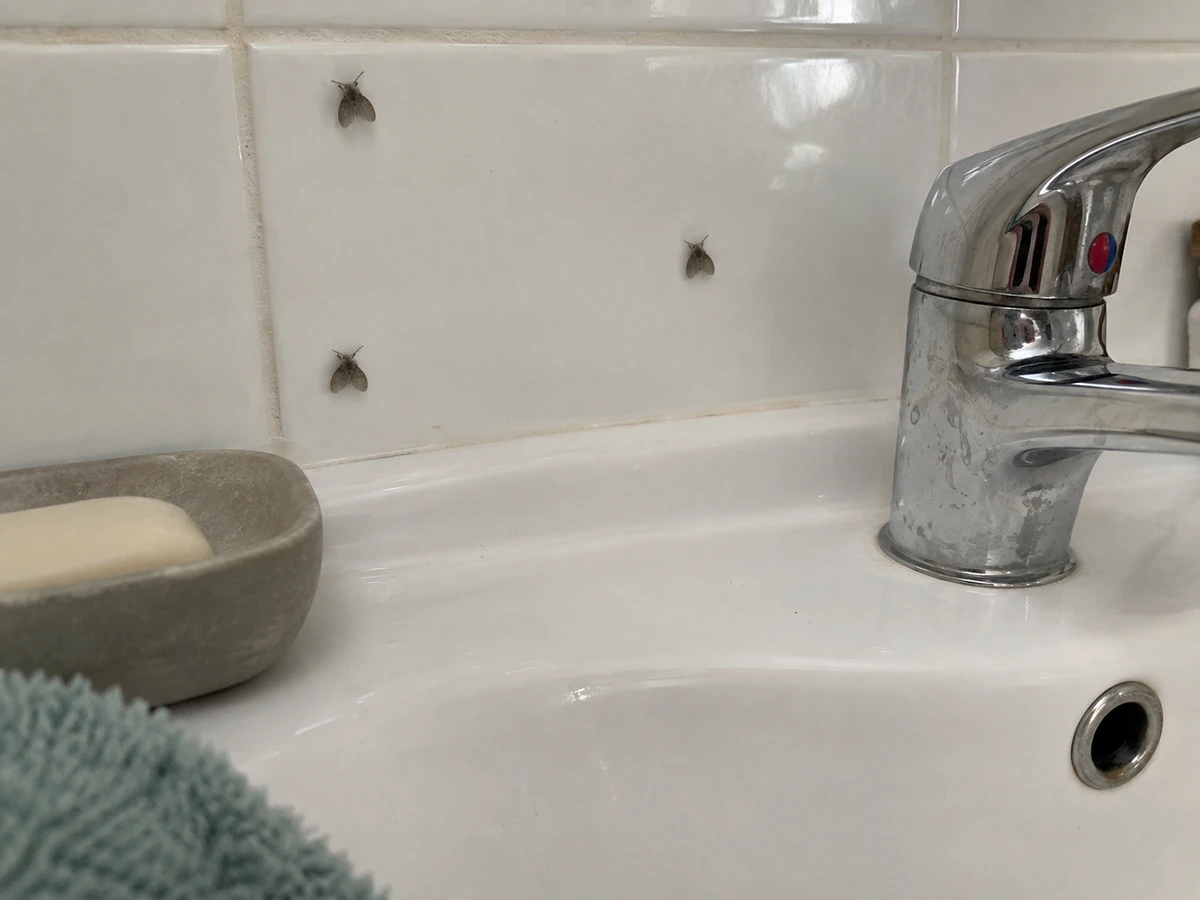
2. Small fuzzy flies with heart-shaped wings resting by the sink
👀 What you see
Small gray-black flies, stocky and fuzzy, with rounded heart-shaped wings folded like a roof, sitting still on the wall near the sink or shower; they barely fly.
🧭 What it means
These are drain flies (moth flies): their larvae live in the greasy biofilm lining the pipe, the trap or the overflow — even in a spotless bathroom. The fruit fly is tan-brown with red eyes and circles ripe fruit.
✅ The proof: how to confirm
Tape test: at night, stretch clear tape sticky side down across each drain without sealing it; in the morning, the most-loaded tape marks the breeding site (and 3 nights in a row with no catch means you’ve won).
⚠️ Caution
Bleach isn’t enough: it runs through too fast to lift the biofilm where the larvae live.
🧩 What to do next
- 1 Identify the fly: small brown by the fruit bowl = fruit fly; metallic green/blue = blow fly; gray and striped on food = house fly; checkerboard pattern in the attic in autumn = cluster fly.
- 2 A sudden swarm of blow flies means a hidden carcass (mouse, bird) in a wall or attic — find and remove it first; the flies leave in 3–5 days.
- 3 For fruit flies: remove ripe fruit and coffee grounds, clean the drain biofilm, and set an apple-cider-vinegar + dish-soap trap.
- 4 For house flies: bag and wash out the trash, screen windows with mesh under 1/16 inch, and add a UV unit or a fly ribbon.
- 5 For barns and large spaces: spread cyromazine larvicide on the breeding matter (manure/bedding) and place attractant bait on resting walls.
- 6 In commercial kitchens, use glue-board units only above food prep (no electrocution) and keep a capture log for inspections.
🛒 Products from our guides
-
Flexible drain cleaning brush
The centerpiece: the only move that physically scrapes the biofilm off the pipe walls.
View on Amazon → -
Thick, clinging drain gel
Clings to vertical walls and dissolves the leftover biofilm instead of running straight down the trap.
View on Amazon → -
Enzyme drain treatment
Poured at night, it digests the organic matter the larvae feed on and keeps them from coming back.
View on Amazon →
As an Amazon Associate we earn from qualifying purchases, at no extra cost to you.
Household insects
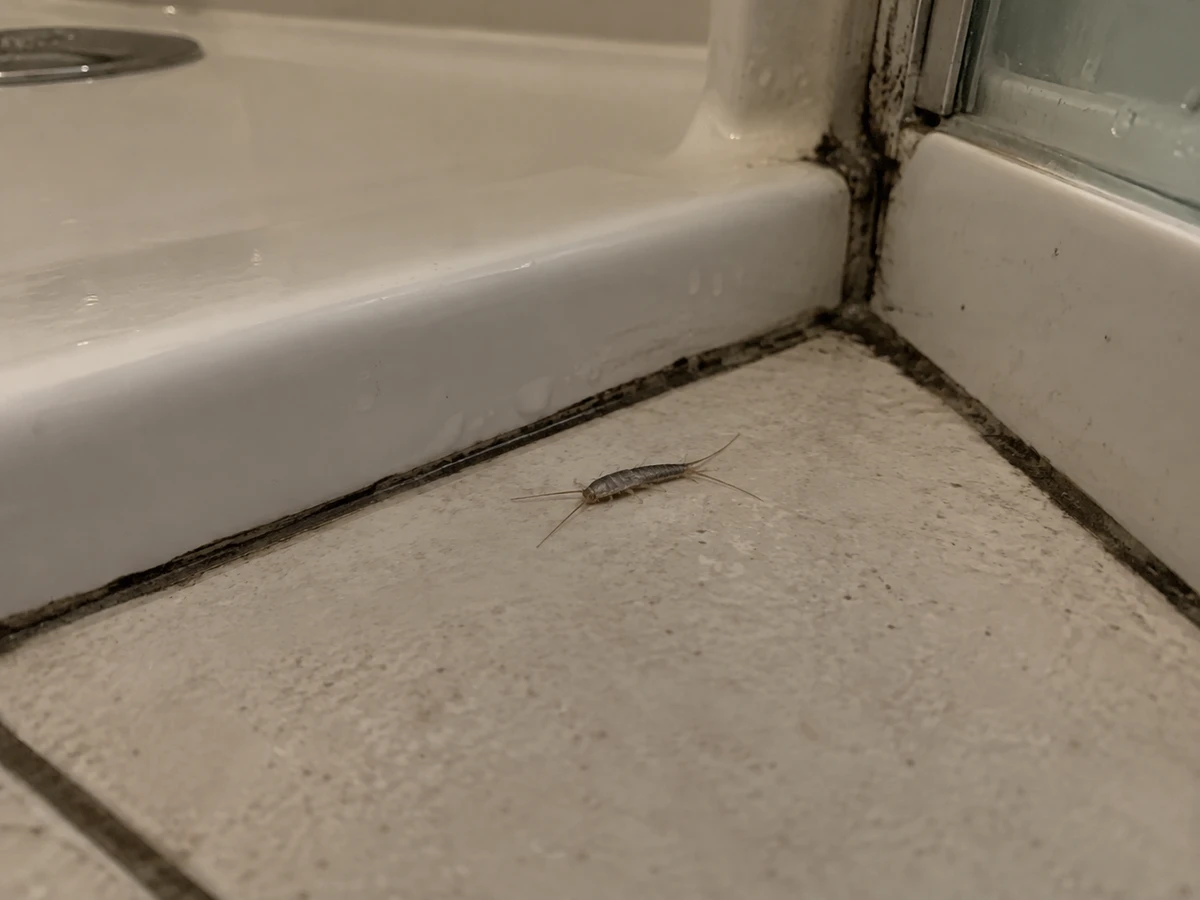
3. A silvery-gray insect darting toward the shower caulk
👀 What you see
An insect about 3/8 in (1 cm) long, tapered, silvery-gray and scaly-looking, wingless, with three tail filaments, wriggling toward the blackened shower caulk when you turn on the light at night.
🧭 What it means
A silverfish (Lepisma saccharina): it signals moisture and cellulose (wallpaper paste, cardboard). It doesn’t bite and transmits nothing; seeing one only at night after a shower is normal.
✅ The proof: how to confirm
A hygrometer settles it in one night (above 65% humidity, it thrives); sticky traps set for a week along the baseboards and under the vanity measure the population.
🛒 Products from our guides
-
Indoor hygrometer
Gives you the humidity reading before you buy anything, in one night.
View on Amazon → -
Monitoring sticky traps
Measuring tools: they show where the population concentrates and how big it is.
View on Amazon → -
Small-room dehumidifier
Goes straight at the humidity that keeps them there.
View on Amazon →
As an Amazon Associate we earn from qualifying purchases, at no extra cost to you.