
Noises and Signs in the Attic: What Is Living Up There?
A noise above the ceiling or damaged insulation doesn’t always point to the same culprit. Here are the signs that tell the attic’s occupants apart.
Pests covered: ants, mice & rats.
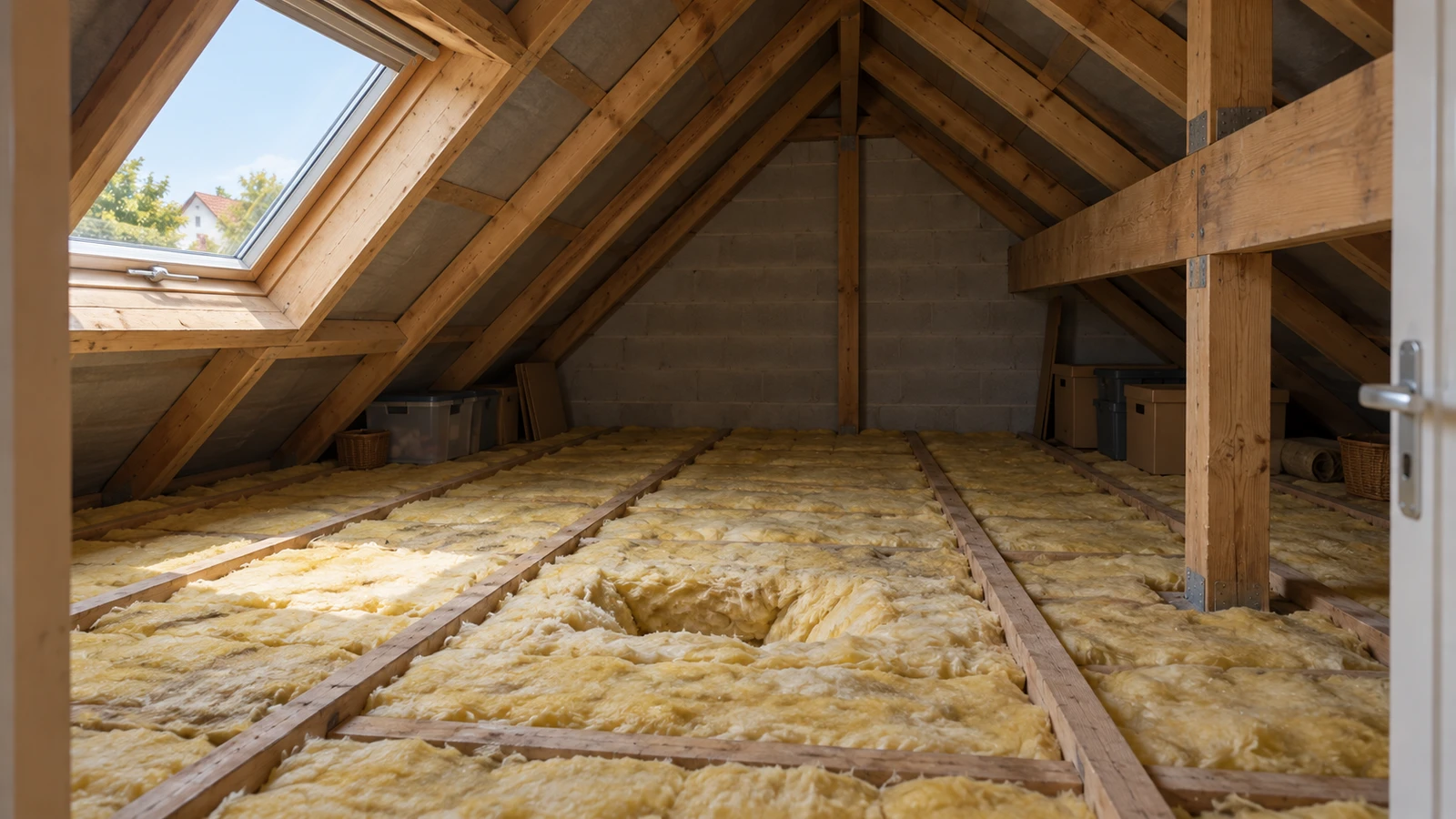
Ants
1. A small pile of pale sawdust under the skylight
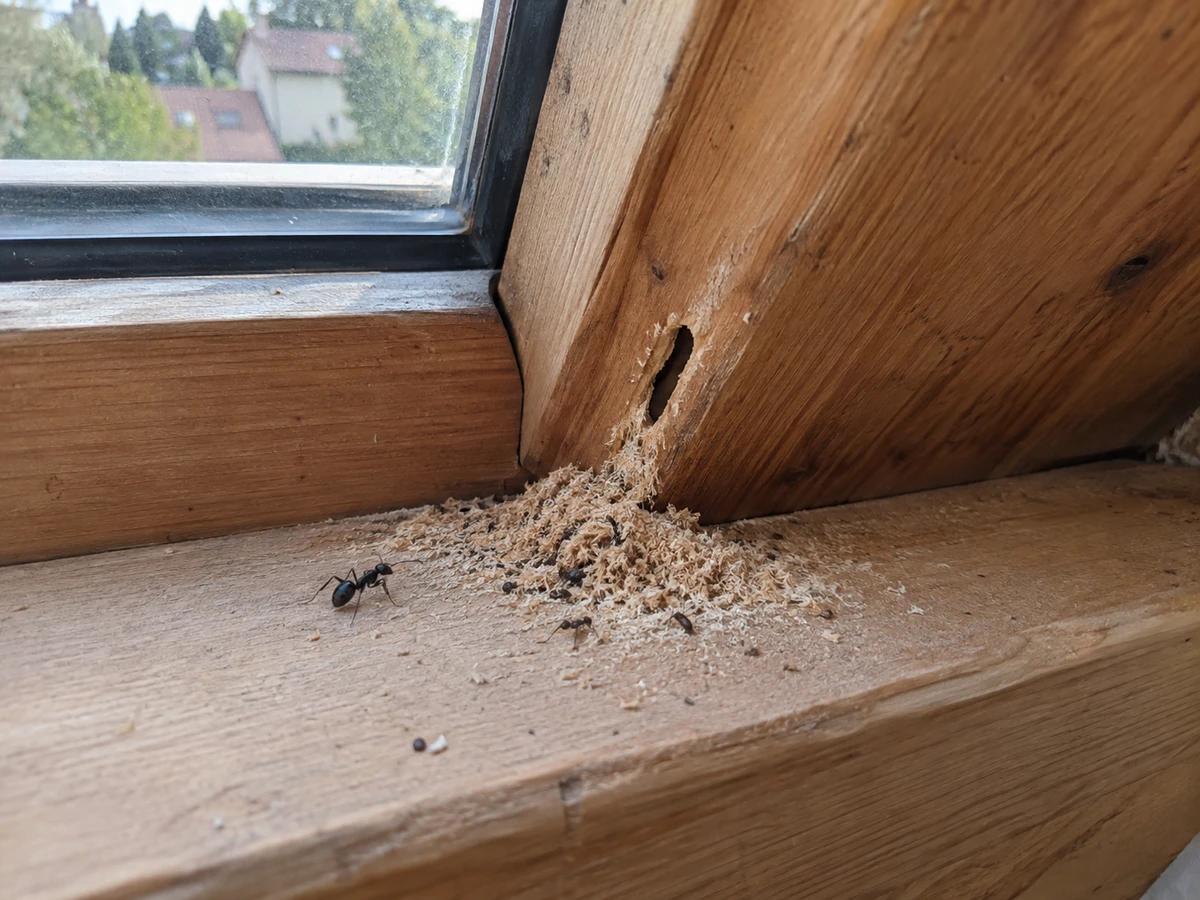
👀 What you see
A small pile of clean sawdust — light wood fibers with a few dark fragments — on the skylight sill or under a rafter, near a clean opening about 1/4 inch (7 mm) wide; large black ants 1/4 to nearly 3/4 inch long at night, sometimes a dry scratching in the wall.
🧭 What it means
The carpenter ant signature: coarse sawdust and smooth galleries in damp wood it excavates without eating. Termites leave mud tubes and soft, honeycombed wood instead.
✅ The proof: how to confirm
Photograph, sweep and check back 24–48 hours later: fresh sawdust in the same spot means active excavation; then tap with a rubber mallet (hollow sound) and test with a screwdriver.
⚠️ Caution
A load-bearing member, hollow-sounding wood over more than about 5 feet, or any doubt about termites: call a professional.
🧩 What to do next
- 1 Identify the species first: tiny reddish ants living inside walls = pharaoh; black foragers coming from outdoors = garden ants; large black ants with coarse sawdust = carpenter ants. The method depends on it.
- 2 Do not spray. Contact spray kills visible workers but never the queen, and with pharaoh ants it can split the colony (budding) and make things worse.
- 3 Wipe active trails with undiluted white vinegar to erase the pheromone highway, then place lentil-sized bait-gel drops directly on those trails, every 4–6 inches.
- 4 Leave the gel undisturbed and let workers carry it back to the nest. Replenish the drops as they are eaten (a good appetite means it is working).
- 5 For an accessible outdoor nest, puff deltamethrin dust into the openings; for carpenter ants, also find and fix the moisture source feeding them.
- 6 Once activity stops, seal entry cracks and pipe gaps with silicone caulk to stop the next generation following the same route.
🛒 Products from our guides
-
Advion Ant Gel (Syngenta)
Micro-drops on trails and gallery edges: the slow action lets workers carry it to the queen.
View on Amazon → -
Delta Dust (deltamethrin)
Blown into accessible galleries, where gel alone isn’t enough.
View on Amazon → -
Wood moisture meter
Carpenter ants pick damp wood: measuring moisture (target below 19%) finds the real cause.
View on Amazon →
As an Amazon Associate we earn from qualifying purchases, at no extra cost to you.
Mice & rats
2. Tunnels in the attic insulation
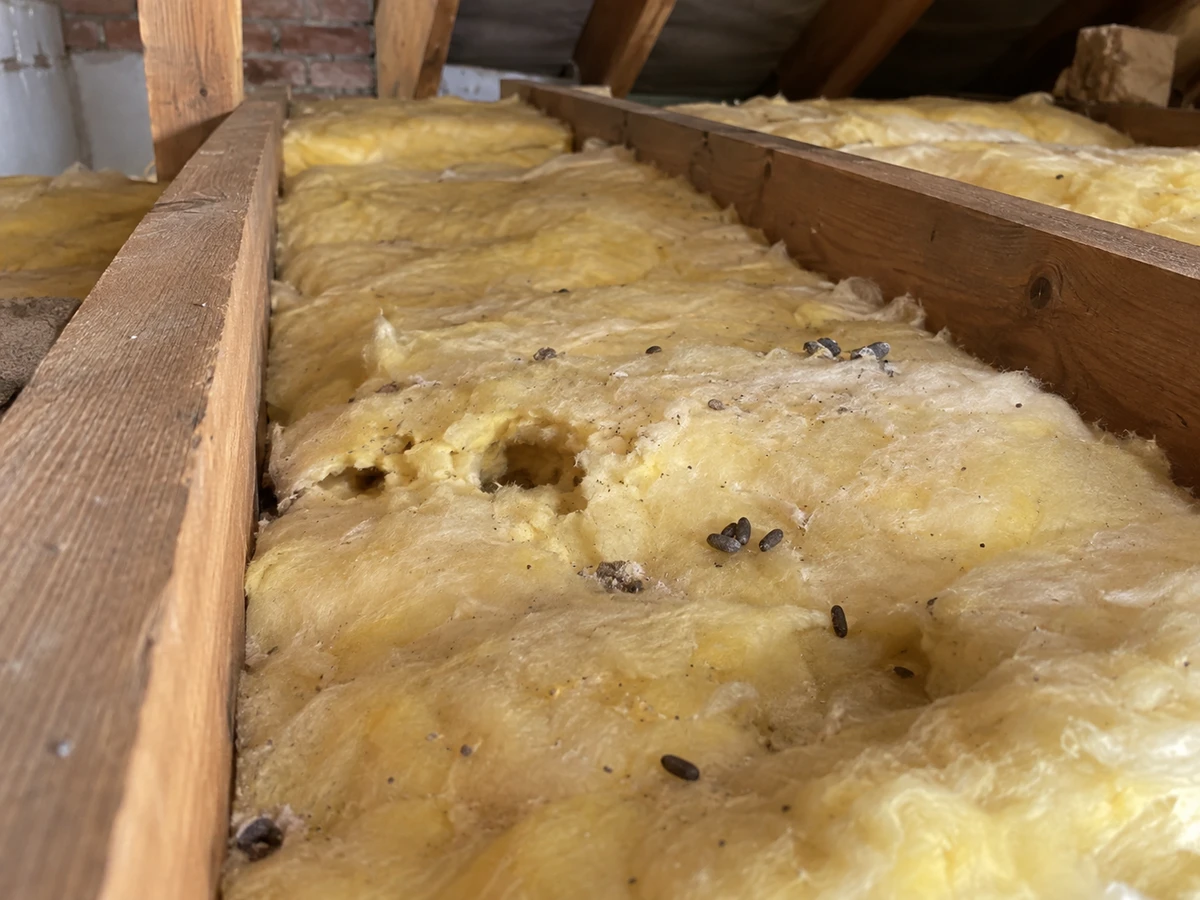
👀 What you see
Attic insulation riddled with tunnels, with light scampering and fine scratching above the ceiling at night.
🧭 What it means
Mice love attic insulation for their nests. A very loud noise, like an animal running, points instead to a squirrel or other wildlife.
✅ The proof: how to confirm
Sift flour across the runway: a print of about 3/8 inch means a mouse, about 3/4 inch a rat.
⚠️ Caution
Mice also climb up gutters, cables and branches: inspect the high entry points, which are often overlooked.
🧩 What to do next
- 1 Mouse or rat? Rice-grain droppings pointed at both ends and scattered = mouse; olive-pit droppings grouped in one spot = rat. Sprinkle flour overnight to read footprints (~⅜ in = mouse, ~¾ in = rat).
- 2 Seal entry points FIRST with steel wool packed into holes and held with caulk — if a ballpoint pen fits, a mouse fits. Never use expanding foam (they chew through it).
- 3 Set snap or electric traps along the walls, baited with peanut butter (not cheese). Use rat-sized traps for rats — a mouse trap will not stop one.
- 4 For heavy infestations, place rodenticide only inside a locked, tamper-resistant bait station — never loose pellets.
- 5 Never vacuum droppings (Hantavirus risk): wet them with diluted bleach (1:10), wear gloves and an N95, bag, then disinfect surfaces.
- 6 Avoid glue traps (cruel and ineffective) and store all food in glass or metal containers.
🛒 Products from our guides
-
Reusable mouse snap traps
Set in the attic, baited with peanut butter, flush against the runways.
View on Amazon → -
Tamper-resistant rodent bait station
For an inaccessible attic with a heavy infestation: a locked box keeps the bait from children and pets.
View on Amazon → -
Steel wool for rodent-proofing
The one material mice can’t gnaw through: it seals the high entry points once you’ve found them.
View on Amazon →
As an Amazon Associate we earn from qualifying purchases, at no extra cost to you.