
Bugs in the Bedroom: Bites, Black Dots and What They Mean
Mattress, sheets, suitcase, closet, windowsill: here are the signs to check in a bedroom, and how to tell bed bugs, mosquitoes, clothes moths and flying ants apart.
Pests covered: ants, mosquitoes, bed bugs, household insects.

Ants
1. A windowsill black with winged ants
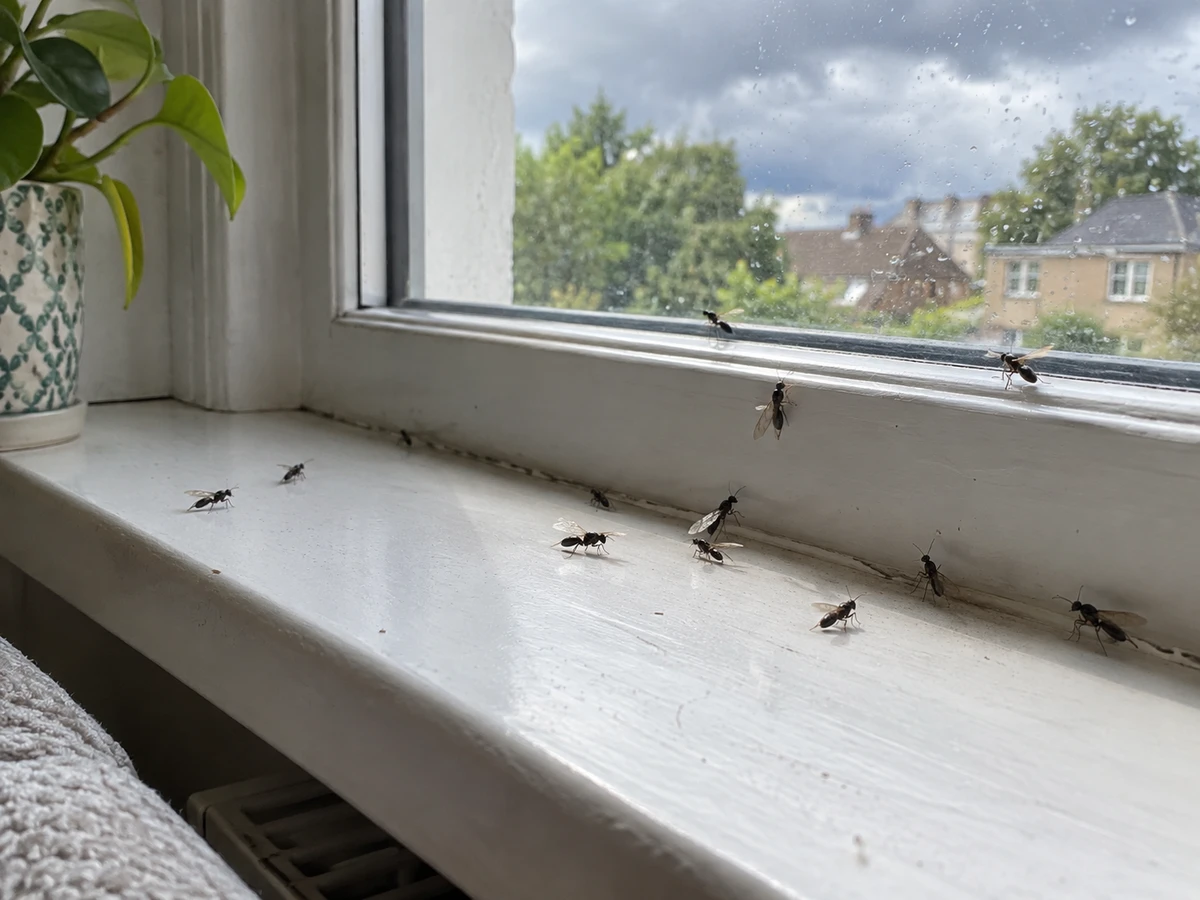
👀 What you see
A swarm of winged ants on the windowsill, heading for the light, often on a hot, muggy July afternoon after a storm.
🧭 What it means
It’s a swarm: it lasts a few hours to two or three days, and these ants don’t sting. On the other hand, large black winged ants (5/16 in / 8 mm and up) coming out of a floorboard crack, a door frame or an interior wall point to carpenter ants.
✅ The proof: how to confirm
Look closely: elbowed (L-shaped) antennae, a narrow pinched waist and two pairs of unequal wings = ant; straight antennae, a uniform body and four identical wings = termite.
⚠️ Caution
If you suspect termites, don’t apply insecticide: catch a few in a jar and have a licensed pest control operator make the diagnosis.
🧩 What to do next
- 1 Identify the species first: tiny reddish ants living inside walls = pharaoh; black foragers coming from outdoors = garden ants; large black ants with coarse sawdust = carpenter ants. The method depends on it.
- 2 Do not spray. Contact spray kills visible workers but never the queen, and with pharaoh ants it can split the colony (budding) and make things worse.
- 3 Wipe active trails with undiluted white vinegar to erase the pheromone highway, then place lentil-sized bait-gel drops directly on those trails, every 4–6 inches.
- 4 Leave the gel undisturbed and let workers carry it back to the nest. Replenish the drops as they are eaten (a good appetite means it is working).
- 5 For an accessible outdoor nest, puff deltamethrin dust into the openings; for carpenter ants, also find and fix the moisture source feeding them.
- 6 Once activity stops, seal entry cracks and pipe gaps with silicone caulk to stop the next generation following the same route.
🛒 Products from our guides
-
Magnetic window screen
Swarmers come in through windows, drawn by the light: closing the openings keeps the swarm out.
View on Amazon → -
Flying insect spray
An emergency contact knockdown on the swarm in one room.
View on Amazon → -
Advion Ant Gel (Syngenta)
If the swarm comes from your home, now is the time to treat the colony.
View on Amazon →
As an Amazon Associate we earn from qualifying purchases, at no extra cost to you.
Mosquitoes
2. A buzz at 3 a.m. and a single bump in the morning
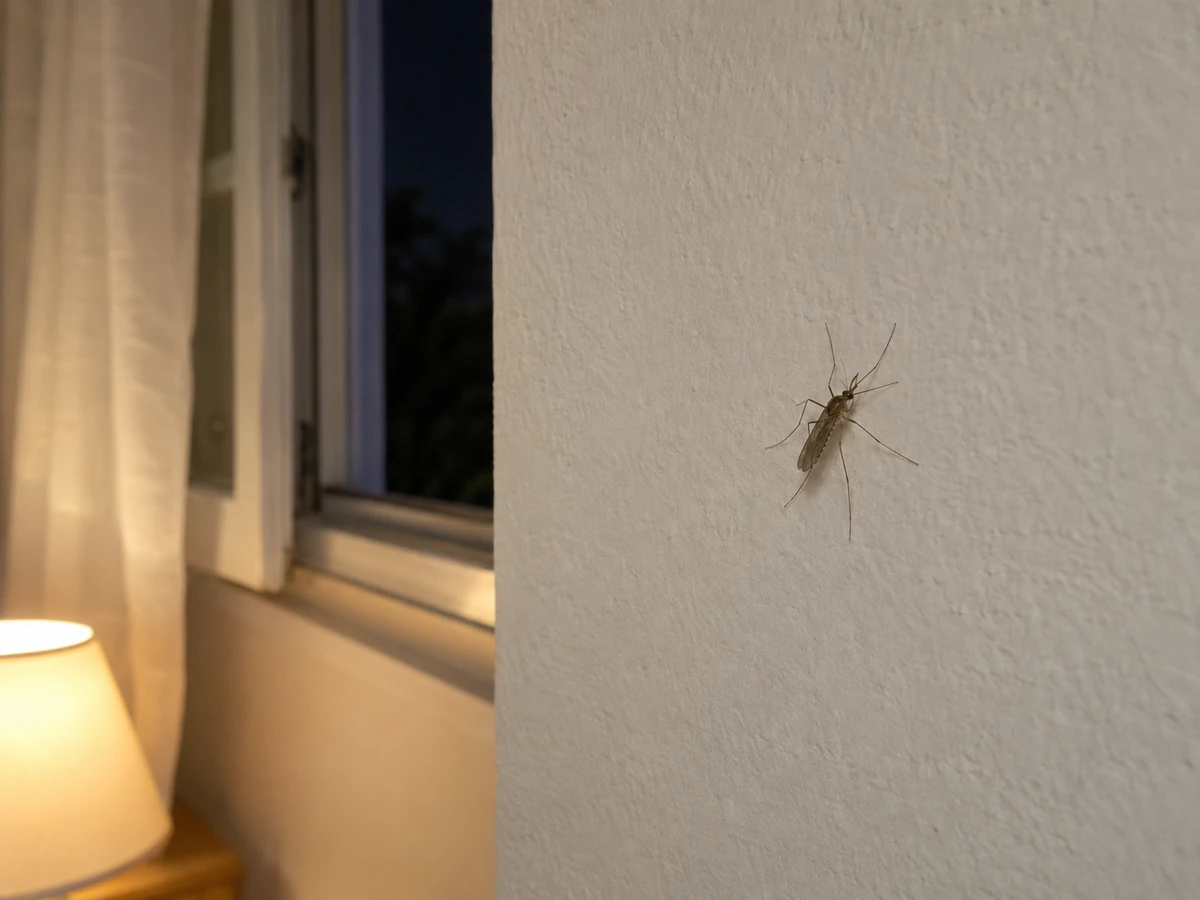
👀 What you see
A dull brown mosquito with a high-pitched whine in the bedroom at night, window open; in the morning, a single red bump that swells fast and itches.
🧭 What it means
The common house mosquito (Culex), a night biter that came in through the window. A single bump, not in a line, that fades within 24–48 hours sets it apart from bed bug bites lined up in a row.
✅ The proof: how to confirm
Single bump + buzzing heard at night = mosquito; bumps lined up in groups of 3–4 point to bed bugs.
⚠️ Caution
No plug-in insecticide diffuser in the room of a baby under 6 months: use a crib mosquito net instead.
🧩 What to do next
- 1 Identify: black with white stripes biting during the day = tiger mosquito (Aedes); dull brown buzzing at night = common mosquito (Culex).
- 2 Kill larvae at the source: empty saucers, buckets and tires weekly, clean gutters, and cover or BTI-treat rain barrels and ponds.
- 3 Protect skin with an EPA/WHO-validated repellent (Picaridin, DEET, IR3535 or OLE/PMD). Skip bracelets, ultrasound and UV lamps — proven ineffective.
- 4 For babies, use nets first; apply topical repellent only by age (IR3535 from 2 months) and never on a child’s hands.
- 5 Indoors: screen windows with mesh under 1/16 inch, run a fan, and use a plug-in diffuser at night (unscented, not in a baby’s room).
- 6 Outdoors: a Thermacell or a simple fan aimed at the table keeps the patio usable.
🛒 Products from our guides
-
Magnetic window screen, flexible strip
A no-drill barrier; any standard mesh also blocks the tiger mosquito.
View on Amazon → -
Magnetic window screen, rigid frame
Magnets built into an aluminum frame: more stable, with no strip to warp.
View on Amazon → -
Crib mosquito net
A physical barrier with no insecticide: suited to an infant’s sleep.
View on Amazon →
As an Amazon Associate we earn from qualifying purchases, at no extra cost to you.
Bed bugs
3. Black dots ground into the mattress seams
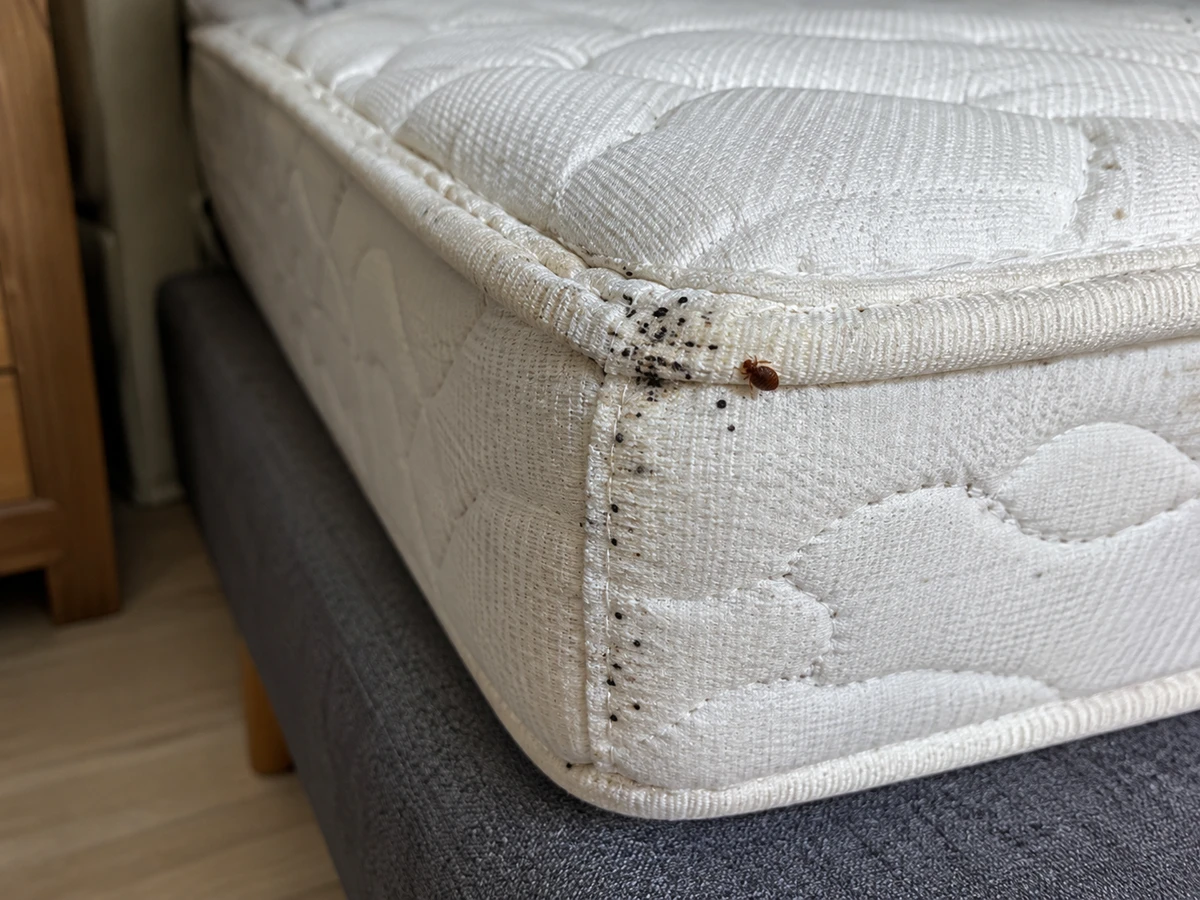
👀 What you see
Small black dots, like felt-tip marker, the size of a pinhead, embedded in the seams and four corners of the mattress, on the box spring or behind the headboard; sometimes the bug itself, flat as a lentil, reddish-brown, about 1/4 inch long.
🧭 What it means
These are bed bug droppings: 70% of bed bugs hide in the bed (seams, box spring slats, headboard, frame joints).
✅ The proof: how to confirm
Dab with a damp cloth: if the dot smears red or brown, that’s proof #1.
⚠️ Caution
Don’t drag the mattress into the hallway: you would spread them through the building.
🧩 What to do next
- 1 Confirm it is bed bugs: apple-seed-sized brown insects, tiny black fecal dots on the mattress that smear red, blood spots on sheets, or translucent shed skins. Bites lined up in 3–4 do not confirm it alone.
- 2 Do not throw out the mattress and do not sleep on the sofa or elsewhere — both spread the infestation through the home or building.
- 3 Mechanical pass: vacuum mattress seams, box spring and baseboards; wash bedding at 140°F + 30 minutes in the dryer; freeze delicate items 4 days at -4°F.
- 4 Thermal pass: steam every inch of the mattress, box spring, baseboards and outlet covers — dry steam is the only step that kills eggs.
- 5 Barrier pass: dust a thin layer of diatomaceous earth along baseboards and under the bed legs (wear an N95 mask while applying).
- 6 Encase the mattress and box spring in a certified cover and set an interceptor under each bed leg to monitor.
- 7 Repeat the steam pass after ~2 weeks (eggs hatch in 10–15 days). Consider the room clear after 6 weeks with no bites and no new signs.
🛒 Products from our guides
-
Dry steam cleaner
Steam at 248°F kills bugs and eggs on contact, with no chemical resistance possible.
View on Amazon → -
Certified zippered mattress encasement
Traps the bugs inside the mattress and makes detection easier while you monitor.
View on Amazon → -
Food-grade diatomaceous earth (non-calcined)
A lasting mineral barrier at crossing points; no resistance possible.
View on Amazon →
As an Amazon Associate we earn from qualifying purchases, at no extra cost to you.
Bed bugs
4. Bites lined up in threes or fours when you wake up
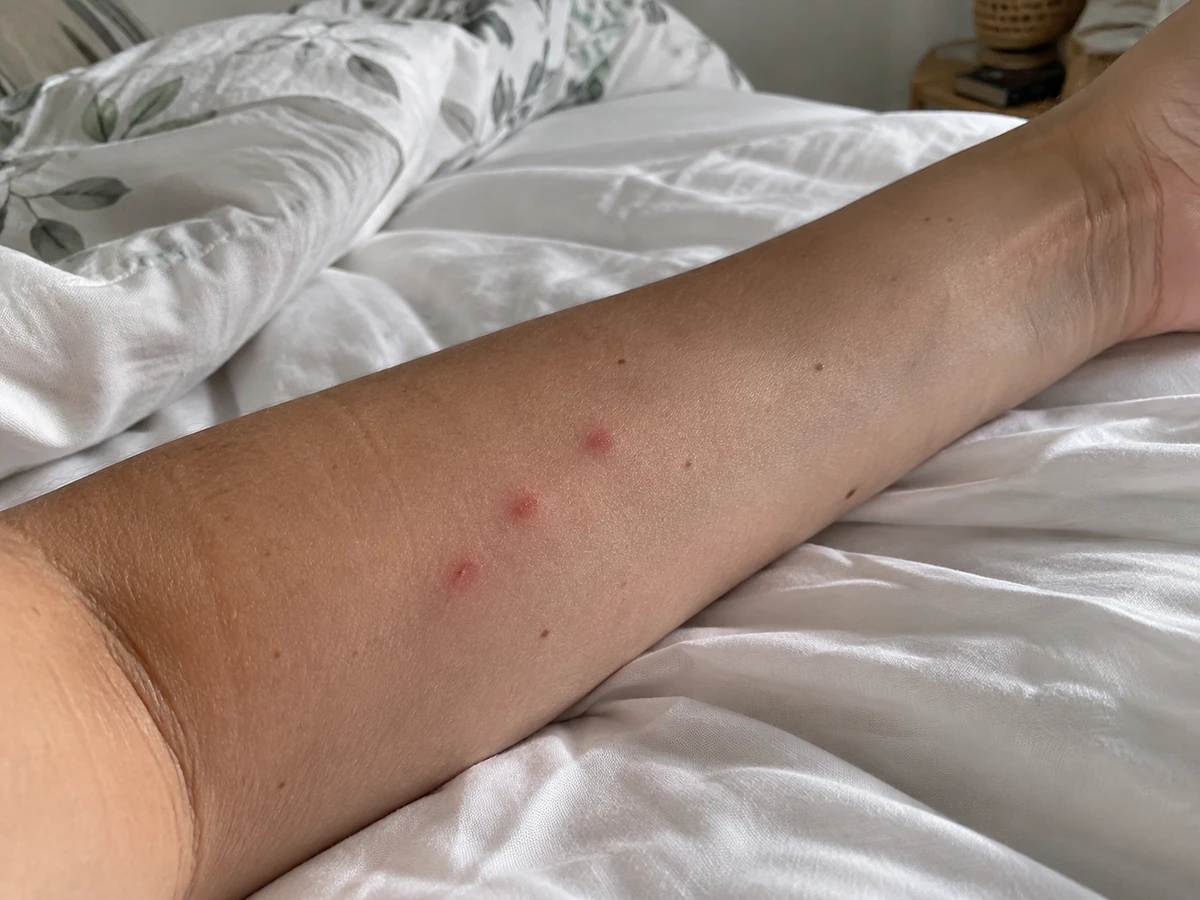
👀 What you see
Three or four bumps in a straight line on exposed skin (arms, shoulders, legs, neck), there when you wake up and intensely itchy for several days.
🧭 What it means
The “breakfast, lunch, dinner” signature of a bed bug feeding as it moves along the skin; a single bump that fades in 24–48 hours points to a mosquito instead. But bites alone prove nothing.
✅ The proof: how to confirm
Put interceptors under the bed legs for fourteen nights, with someone sleeping in the bed every night: a single catch confirms presence.
🧩 What to do next
- 1 Confirm it is bed bugs: apple-seed-sized brown insects, tiny black fecal dots on the mattress that smear red, blood spots on sheets, or translucent shed skins. Bites lined up in 3–4 do not confirm it alone.
- 2 Do not throw out the mattress and do not sleep on the sofa or elsewhere — both spread the infestation through the home or building.
- 3 Mechanical pass: vacuum mattress seams, box spring and baseboards; wash bedding at 140°F + 30 minutes in the dryer; freeze delicate items 4 days at -4°F.
- 4 Thermal pass: steam every inch of the mattress, box spring, baseboards and outlet covers — dry steam is the only step that kills eggs.
- 5 Barrier pass: dust a thin layer of diatomaceous earth along baseboards and under the bed legs (wear an N95 mask while applying).
- 6 Encase the mattress and box spring in a certified cover and set an interceptor under each bed leg to monitor.
- 7 Repeat the steam pass after ~2 weeks (eggs hatch in 10–15 days). Consider the room clear after 6 weeks with no bites and no new signs.
🛒 Products from our guides
-
Two-moat bed bug interceptors, set of 8
Four legs for the bed, four for the couch; a light base makes the morning count a glance with a flashlight.
View on Amazon → -
ClimbUp insect interceptor
The design that established the two-moat format, with a notably slick inner wall.
View on Amazon → -
Tight-beam LED flashlight
A raking beam across the pale floor of the dish makes a nearly translucent new nymph appear at once.
View on Amazon →
As an Amazon Associate we earn from qualifying purchases, at no extra cost to you.
Bed bugs
5. See-through shed skins and small blood spots on the sheets
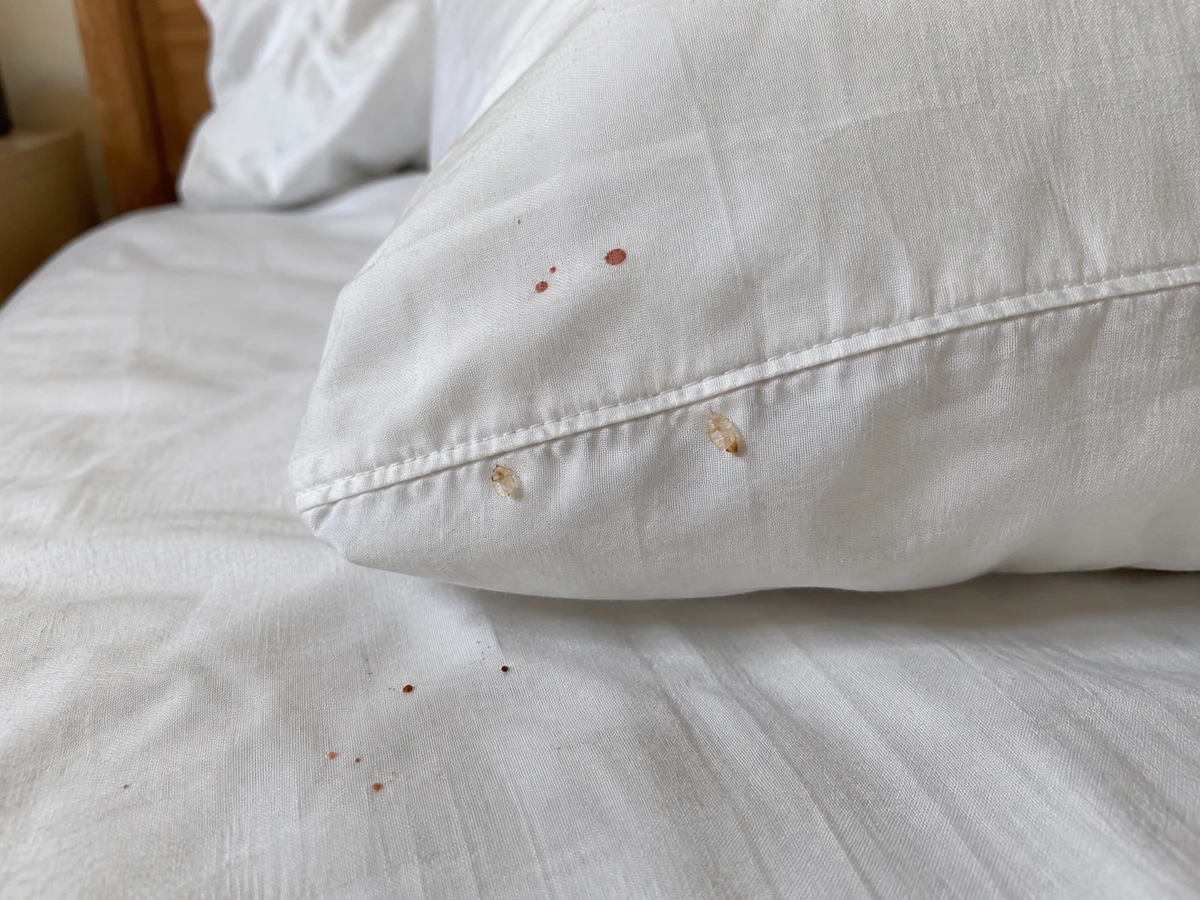
👀 What you see
Small red spots on the sheets or pillowcase, and translucent shed skins near the seams; in a heavy infestation, a “rotten raspberry” or musty coriander smell.
🧭 What it means
A blood spot comes from a fed bug crushed in your sleep; the shed skins (five molts before adulthood) show young bugs growing up on site.
✅ The proof: how to confirm
Lift the four corners of the mattress and check the seams, box spring slats and headboard in raking light: black dots, shed skins or a bug confirm it.
⚠️ Caution
Don’t flee to the couch: the bugs follow you and you infest two rooms instead of one.
🧩 What to do next
- 1 Confirm it is bed bugs: apple-seed-sized brown insects, tiny black fecal dots on the mattress that smear red, blood spots on sheets, or translucent shed skins. Bites lined up in 3–4 do not confirm it alone.
- 2 Do not throw out the mattress and do not sleep on the sofa or elsewhere — both spread the infestation through the home or building.
- 3 Mechanical pass: vacuum mattress seams, box spring and baseboards; wash bedding at 140°F + 30 minutes in the dryer; freeze delicate items 4 days at -4°F.
- 4 Thermal pass: steam every inch of the mattress, box spring, baseboards and outlet covers — dry steam is the only step that kills eggs.
- 5 Barrier pass: dust a thin layer of diatomaceous earth along baseboards and under the bed legs (wear an N95 mask while applying).
- 6 Encase the mattress and box spring in a certified cover and set an interceptor under each bed leg to monitor.
- 7 Repeat the steam pass after ~2 weeks (eggs hatch in 10–15 days). Consider the room clear after 6 weeks with no bites and no new signs.
🛒 Products from our guides
-
Dry steam cleaner
Steam at 248°F kills bugs and eggs on contact, with no chemical resistance possible.
View on Amazon → -
Certified zippered mattress encasement
Traps the bugs inside the mattress and makes detection easier while you monitor.
View on Amazon → -
Residual cypermethrin bed bug spray
Residual action on the box spring, baseboards and headboard, alongside steam — never on the mattress you sleep on.
View on Amazon →
As an Amazon Associate we earn from qualifying purchases, at no extra cost to you.
Bed bugs
6. A suitcase back from a trip, set down on the bed
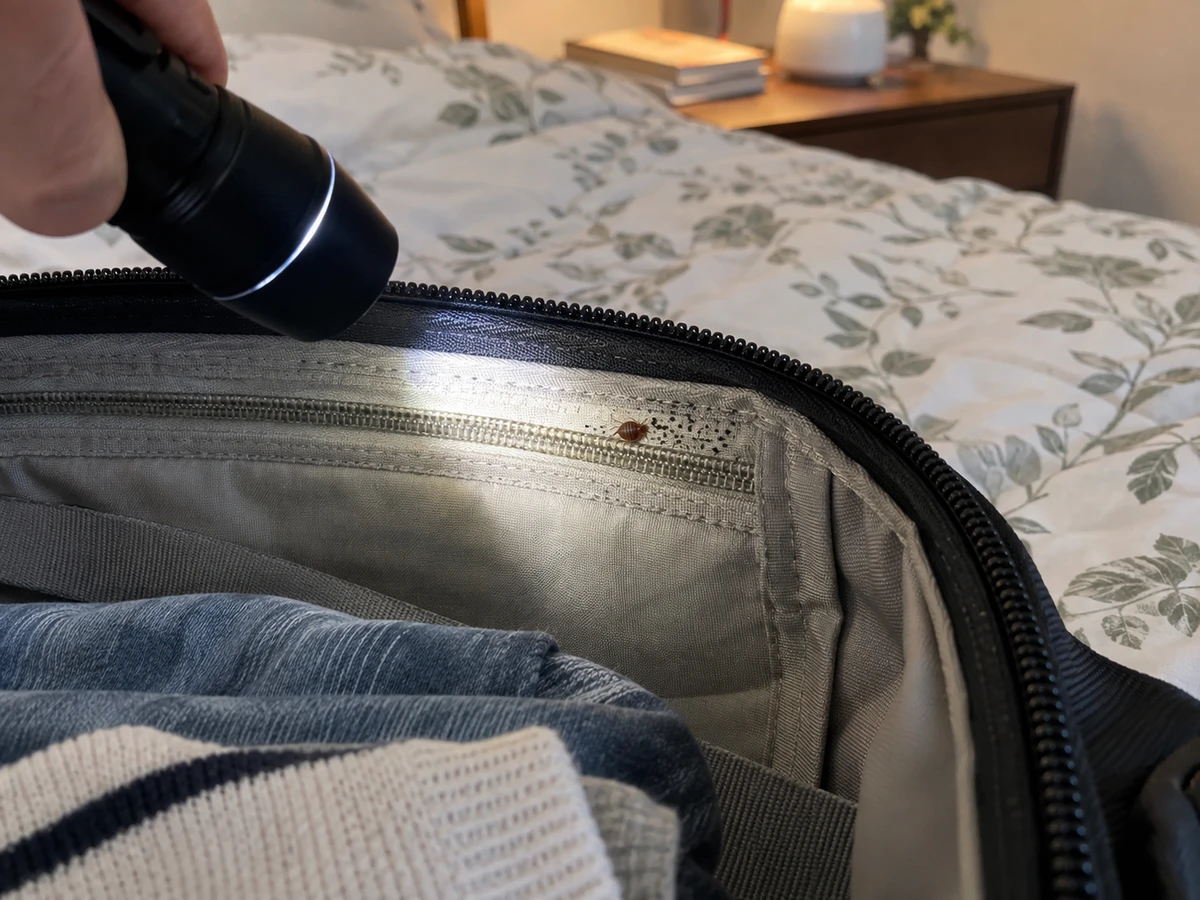
👀 What you see
A suitcase or bag set on the bed when you get home, with seams, zippers and wheels where bed bugs (flat, reddish-brown, about 1/4 inch) or their black spots can hide.
🧭 What it means
Bed bugs travel passively in the seams of what you carry: they ride in what you set down, not on your skin.
✅ The proof: how to confirm
Check the seams, pocket bottoms and wheels with a flashlight at a low raking angle: black spotting, shed skins or a bug.
⚠️ Caution
Never put the suitcase on the bed: everything that was worn goes into a hot dryer before the bag comes upstairs, and the inside of the suitcase gets vacuumed.
🧩 What to do next
- 1 Confirm it is bed bugs: apple-seed-sized brown insects, tiny black fecal dots on the mattress that smear red, blood spots on sheets, or translucent shed skins. Bites lined up in 3–4 do not confirm it alone.
- 2 Do not throw out the mattress and do not sleep on the sofa or elsewhere — both spread the infestation through the home or building.
- 3 Mechanical pass: vacuum mattress seams, box spring and baseboards; wash bedding at 140°F + 30 minutes in the dryer; freeze delicate items 4 days at -4°F.
- 4 Thermal pass: steam every inch of the mattress, box spring, baseboards and outlet covers — dry steam is the only step that kills eggs.
- 5 Barrier pass: dust a thin layer of diatomaceous earth along baseboards and under the bed legs (wear an N95 mask while applying).
- 6 Encase the mattress and box spring in a certified cover and set an interceptor under each bed leg to monitor.
- 7 Repeat the steam pass after ~2 weeks (eggs hatch in 10–15 days). Consider the room clear after 6 weeks with no bites and no new signs.
🛒 Products from our guides
-
Bright LED inspection flashlight
At a raking angle, shed skins and dark fecal spotting jump out of a seam.
View on Amazon → -
Handheld garment steamer
Run slowly along seams and linings, it kills by heat without soaking the fabric.
View on Amazon → -
Permethrin spray for clothing and gear
Applied to a suitcase’s seams before a trip you have doubts about; never on skin, and keep cats away.
View on Amazon →
As an Amazon Associate we earn from qualifying purchases, at no extra cost to you.
Household insects
7. Small holes in a stored wool sweater
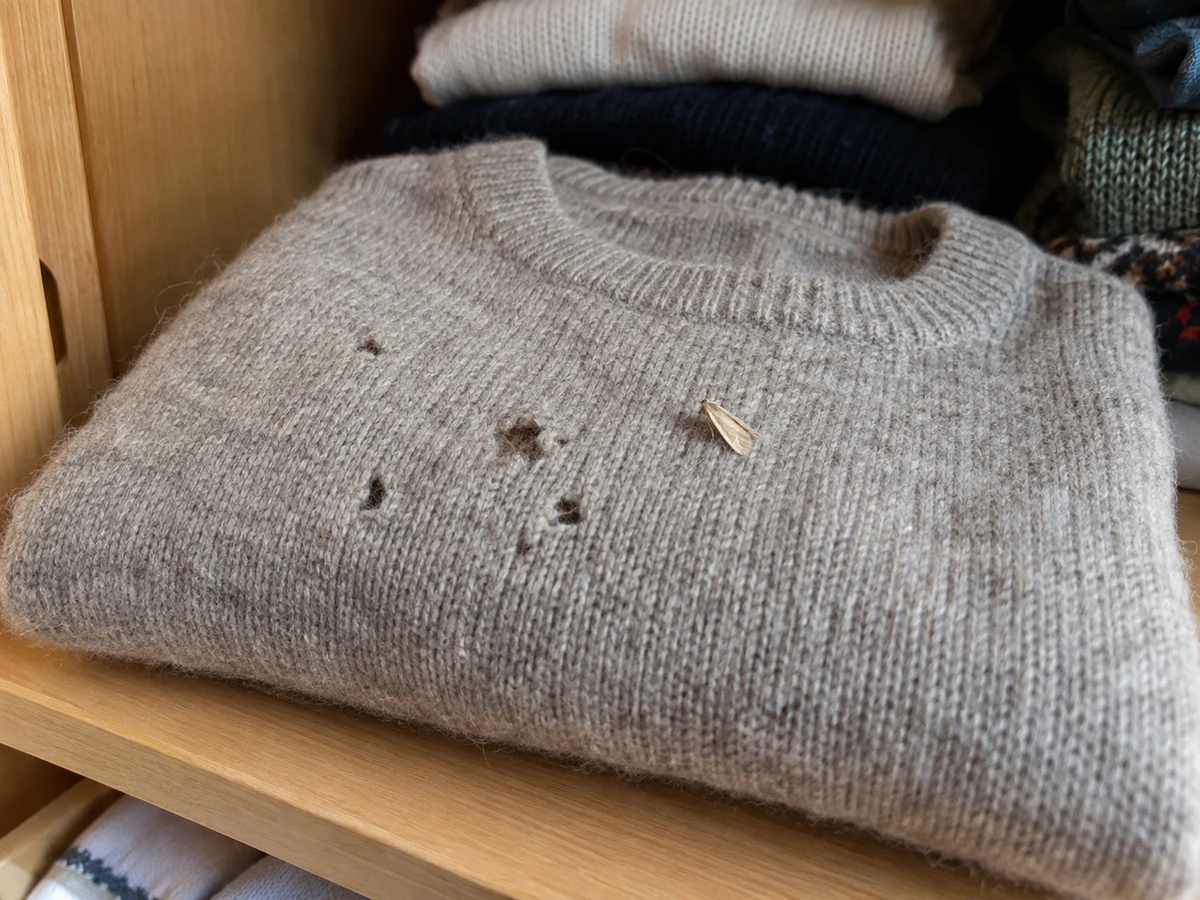
👀 What you see
Small holes in a wool sweater that sat untouched in the closet, and a small, inconspicuous moth that flies poorly.
🧭 What it means
These are clothes moth larvae, which eat keratin (wool, cashmere, silk, felt) and never pure synthetics. They look for a textile that stays still for months.
✅ The proof: how to confirm
Holes in several wool garments justify acting: wash, dry and store them in closed bags.
🛒 Products from our guides
-
Zippered garment storage bags
A washed, dried item stored in a closed bag no longer interests them: that’s the main lever.
View on Amazon → -
Vacuum storage bags for clothes
An airtight version of the closed bag, for washed, dried woolens that will stay stored for months.
View on Amazon → -
Cedar blocks for the closet
Cedar bothers moths without eliminating them: a complement to the bag, never a substitute.
View on Amazon →
As an Amazon Associate we earn from qualifying purchases, at no extra cost to you.